
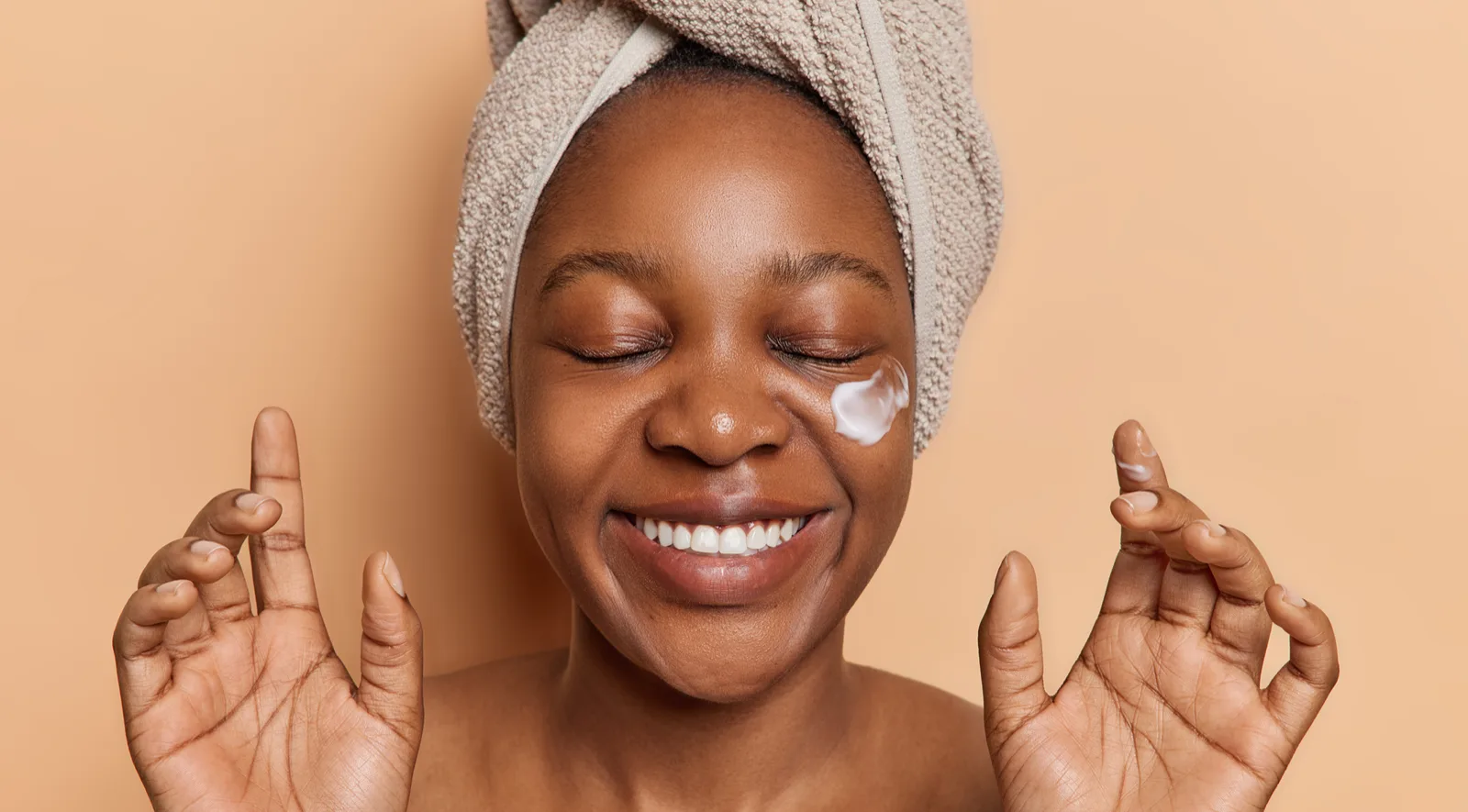
Getting a good night’s sleep does more than restore your energy, it’s also when your skin does its most important repair work. While you rest, cell turnover accelerates, moisture barriers rebuild, and collagen production ramps up. That’s exactly the window the GlutaWhite Collagen Brightening Night Face Cream from First Lady is designed to work in, combining glutathione, collagen, shea butter, argan, coconut, truffle extract and niacinamide into a single overnight formula.
Below, we unpack what the science says about each ingredient, so you can decide whether this Glutathione Collagen Night Cream deserves a place on your bedside table.
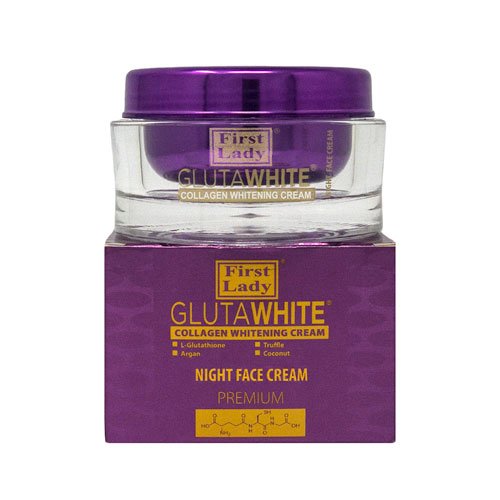
GlutaWhite Collagen Brightening Night Face Cream with Glutathione & Shea Butter 100ml
£9.99
1. Glutathione: The Body’s Master Antioxidant, Applied Topically
Glutathione is a tripeptide (made of glutamine, cysteine and glycine) produced naturally in every cell of the body, where it neutralises free radicals and supports the liver’s detoxification pathways. In dermatology, researchers have become increasingly interested in its role in skin tone. A widely cited review in the Indian Journal of Dermatology, Venereology and Leprology examined the evidence behind glutathione’s effect on pigmentation. It concluded that glutathione can inhibit tyrosinase, the enzyme responsible for melanin production, helping to regulate pigment synthesis and support a more even skin tone (Sonthalia et al., 2016).
Consequently, formulating glutathione into a leave-on night cream is a logical extension of this research: rather than relying solely on oral supplementation, topical delivery lets the antioxidant sit directly on the skin’s surface throughout the night, undisturbed by daytime pollution, makeup, or UV exposure.
2. Collagen: Supporting Firmness While You Sleep
Collagen is the structural protein that keeps skin plump and elastic, but natural production declines by roughly 1% each year after the mid-twenties. A double-masked, placebo-controlled study published in Skin Pharmacology and Physiology found that collagen peptide supplementation measurably improved skin elasticity and hydration over eight weeks (Proksch et al., 2014). While that trial used an oral supplement, the underlying mechanism, collagen supporting the skin’s dermal matrix, is why cosmetic chemists also incorporate collagen into topical night creams, where it helps form a protective film that locks in moisture and supports the skin’s repair processes as it sleeps.
In other words, applying a collagen-infused night cream doesn’t replace your body’s natural synthesis, but it does create the hydrated, well-conditioned environment collagen needs to do its job effectively.
3. Niacinamide: The Clinically Proven Pigmentation Fighter
Of all the ingredients in this formula, niacinamide (vitamin B3) has arguably the strongest clinical backing. A landmark study in the British Journal of Dermatology demonstrated that topical niacinamide significantly reduced hyperpigmentation and suppressed the transfer of melanosomes (pigment-carrying structures) from melanocytes to surrounding skin cells, resulting in a visibly more even skin tone after just four weeks of use (Hakozaki et al., 2002). Niacinamide also strengthens the skin’s barrier function and has anti-inflammatory properties, making it a natural complement to brightening actives like glutathione, which can otherwise be irritating on their own.
4. Shea Butter: Deep, Long-Lasting Hydration
Sourced from the nut of the African shea tree, shea butter is rich in oleic and stearic fatty acids, along with vitamins A and E. Research on its composition highlights its high concentration of unsaponifiables, the fraction responsible for its moisturising and mild anti-inflammatory effects, which help soothe compromised or sensitised skin while forming an occlusive layer that reduces transepidermal water loss overnight (Israel, 2014). For a brightening formula in particular, this matters: many active ingredients that target pigmentation can be drying, so pairing them with a rich emollient like shea butter helps counterbalance that effect.
5. Argan Oil: Elasticity Support Backed by a Randomised Trial
Argan oil isn’t just a marketing buzzword, it has been the subject of an actual randomised, controlled clinical trial. Researchers publishing in Clinical, Cosmetic and Investigational Dermatology gave postmenopausal women cosmetic argan oil for 60 days. They found measurable improvements in skin elasticity compared with a control group using olive oil (Boucetta et al., 2015). Its high concentration of essential fatty acids and tocopherols (vitamin E) makes it a valuable addition to a night formula, where its lightweight, non-comedogenic texture helps deliver antioxidants without clogging pores.
6. Coconut Extract: Reinforcing the Skin Barrier
A frequently cited study compared extra virgin coconut oil against mineral oil as a moisturiser for mild-to-moderate xerosis (dry skin) and found coconut oil performed comparably well, improving skin hydration and barrier lipid levels (Agero & Verallo-Rowell, 2004, Dermatitis). In a brightening night cream, this barrier-supporting role is essential, a well-hydrated skin barrier allows active ingredients like niacinamide and glutathione to work efficiently without triggering irritation.
7. Truffle Extract: An Emerging Antioxidant Ingredient
Truffle extract is a newer addition to skincare formulations, prized for its polyphenol and mineral content. While large-scale clinical trials on topical truffle extract are still limited compared with the other ingredients above, food-science research on truffle species has documented meaningful antioxidant and free-radical-scavenging activity, supporting its inclusion alongside more established actives like glutathione and niacinamide as part of a broader antioxidant strategy for the skin.
How to Use a Glutathione Collagen Night Cream Effectively
Because several of these ingredients, particularly glutathione and niacinamide, actively influence melanin production, consistency and sun protection are essential to seeing results. Dermatology guidance on pigmentation treatment consistently emphasises that:
- Daily SPF is non-negotiable. Brightening actives increase the skin’s sensitivity to UV-triggered pigmentation, so a broad-spectrum sunscreen each morning helps protect your progress.
- Patch-test first. Apply a small amount behind your ear overnight before using it on your full face, especially if you have sensitive or reactive skin.
- Expect a settling-in period. Some users notice a temporary change before brightening becomes visible, as skin cells renew ahead of natural exfoliation, this is a normal part of the process with consistent use.
- Apply to clean, dry skin before bed, allowing the formula to absorb fully and work uninterrupted through the night’s natural repair cycle.
The Bottom Line
The case for a Glutathione Collagen Night Cream isn’t just cosmetic marketing, it’s grounded in a genuinely well-researched set of ingredients. Niacinamide has some of the strongest clinical trial data for reducing pigmentation, glutathione’s antioxidant and tyrosinase-inhibiting properties are increasingly well documented in dermatology literature, and collagen, shea butter, argan, and coconut all bring complementary, evidence-supported benefits for elasticity, hydration, and barrier repair. Used consistently, and always alongside daily SPF, this combination gives your skin the tools it needs to look brighter, firmer and more even-toned by morning.
Ready to add it to your evening routine? Shop the GlutaWhite Collagen Brightening Night Face Cream at First Lady London →
Related reading: Glutathione & Collagen Dual Care: Why Day and Night Creams Deliver Superior Skin Results
References
- Sonthalia S, Daulatabad D, Sarkar R. Review of glutathione’s role in skin pigmentation. Indian Journal of Dermatology, Venereology and Leprology. 2016.
- Hakozaki T, et al. The effect of niacinamide on reducing cutaneous pigmentation and suppression of melanosome transfer. British Journal of Dermatology. 2002;147(1):20-31.
- Proksch E, et al. Oral supplementation of specific collagen peptides has beneficial effects on human skin physiology. Skin Pharmacology and Physiology. 2014;27(1):47-55.
- Boucetta KQ, et al. The effect of dietary and/or cosmetic argan oil on postmenopausal skin elasticity. Clinical, Cosmetic and Investigational Dermatology. 2015.
- Agero ALC, Verallo-Rowell VM. A randomised double-masked controlled trial comparing extra virgin coconut oil with mineral oil as a moisturiser for xerosis. Dermatitis. 2004;15(3):109-116.
- Israel MO. Effects of cocoa butter and shea butter on cutaneous elasticity and hydration. Journal of Natural Products and Plant Resources.
- British Association of Dermatologists-patient information leaflets.
- NHS-Skin, hair and nails.
Leave a Reply