
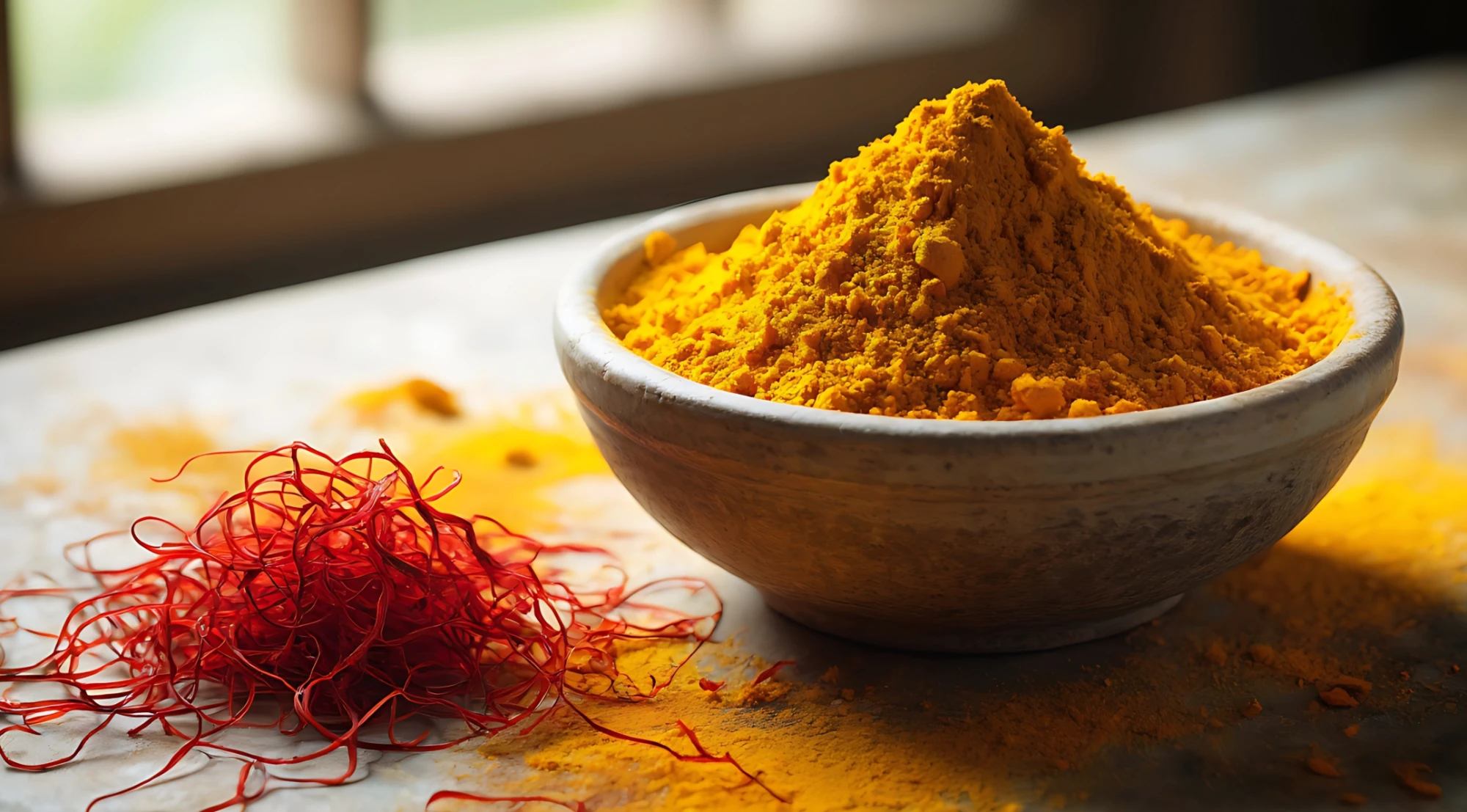
If you have ever wondered why turmeric and saffron have been prized in skincare traditions for centuries, you are not alone. Both ingredients now sit at the centre of a growing body of laboratory and clinical research. As a result, a well-made turmeric and saffron exfoliating soap is no longer just a heritage ritual. It is a practical, affordable way to cleanse, gently exfoliate and support a brighter-looking complexion every day.
In this guide, we look at what the science says about each ingredient, how it relates to the First Lady Bright Express Turmeric with Saffron Brightening Exfoliating Soap, and how to use it properly.
What Is Turmeric and Saffron Soap?
A turmeric and saffron soap is a cleansing bar that combines turmeric (Curcuma longa) and saffron (Crocus sativus). Turmeric is the golden root behind curcumin, its best-studied active compound. Saffron comes from the delicate stigmas of the crocus flower and contains crocin, crocetin, safranal and picrocrocin.
The First Lady Bright Express bar is a 200g soap designed to exfoliate, cleanse and brighten. It is made for people who want smoother, more even-looking skin on the face and body without a complicated routine. It also fits within the wider Bright Express turmeric range, making it easy to build a matching routine.
Why Do These Two Ingredients Work Well Together?
Turmeric and saffron are both rich in plant compounds that behave as antioxidants. Research suggests they may also influence skin in complementary ways. Researchers have studied curcumin for its effects on pigment producing pathways, while saffron’s crocin and safranal have been studied for antioxidant and protective activity. In other words, one ingredient is often investigated for tone, and the other for defence against everyday skin stress.
A 2016 systematic review of the clinical evidence, published in Phytotherapy Research, examined turmeric and curcumin across a range of skin conditions and concluded the ingredients show promise, while calling for larger, better-designed trials (Vaughn, Branum and Sivamani, 2016). We have written the benefits below with that context in mind.
Benefits of Turmeric and Saffron Soap
1. Deep, Everyday Cleansing
First and foremost, a soap has to clean well. Bar cleansers lift away oil, sweat, pollution particles and product residue that build up across the day. Clean skin also lets the rest of your routine, such as lotion or serum, sit properly on the surface rather than on top of debris.
Nevertheless, cleansing is a balance. Research on cleansers and the skin barrier shows that harsh surfactants and high-pH washes can leave skin feeling tight and dry (Ananthapadmanabhan et al., 2004). Therefore, use lukewarm water, wash only once or twice a day, and follow with moisturiser.
2. Gentle Exfoliation for a Smoother Feel
Skin naturally sheds dead cells from its outer layer. When that process slows, or cells cling to the surface, skin can look dull and feel rough. Lathering a bar of soap with a gentle massage helps loosen those cells and reveal fresher skin beneath.
As a result, regular gentle cleansing can leave skin feeling smoother and looking more radiant. Importantly, gentle is the key word. Scrubbing hard does not improve results and can irritate the skin, which may worsen uneven tone.
3. Support for a More Even-Looking Skin Tone
This is the benefit most people are searching for. Curcumin has been widely studied in the lab for its effect on melanogenesis, the process by which skin produces melanin pigment. Studies report that curcumin and its derivatives can inhibit tyrosinase, the key enzyme in melanin production, and influence signalling pathways linked to pigment formation. Similarly, saffron has been reviewed for its role in cosmetic dermatology, including pigmentation concerns such as melasma and dark spots.
4. Antioxidant Support for Everyday Skin Stress
Skin is exposed daily to ultraviolet light, pollution and other sources of oxidative stress. Both curcumin and saffron constituents have well-documented antioxidant activity. For example, reviews describe crocin and safranal as having strong antioxidant capacity, with crocin shown to neutralise reactive oxygen species in human skin fibroblast cells. As a result, ingredients like these are increasingly popular in products designed to help skin look healthy and resilient.
Turmeric is traditionally known for its calming reputation. Researchers have studied curcumin extensively for its anti-inflammatory activity (Hewlings and Kalman, 2017), and saffron has also been investigated for anti-inflammatory effects. In skincare terms, this is why these botanicals often appear in products aimed at skin that looks tired or stressed.
5. A Fresher, More Radiant Complexion
When cleansing, gentle exfoliation and antioxidant support work together, the visible result is often a more luminous finish. Dull skin usually reflects a build-up of surface cells, uneven tone and oxidative stress. Addressing all three, even modestly, can make skin look noticeably fresher over several weeks of consistent use.
6. Simple, Affordable and Easy to Use on Face and Body
Finally, convenience matters. Many people abandon complicated routines within weeks. A single bar, priced at just £3.79, that works on the face and body is easy to keep up. Consistency is what drives visible change in skincare, so an approachable product often outperforms a complicated one that never gets used.
How to Use Turmeric and Saffron Soap
Follow these steps for the best experience:
- Wet your skin with lukewarm water. Hot water strips natural oils.
- Build a lather in your hands first, then apply it to the face or body in gentle circles for 30 to 60 seconds.
- Avoid the eye area and rinse thoroughly.
- Pat dry with a clean towel rather than rubbing.
- Use a turmeric and saffron serum to treat any uneven areas of the skin, or apply it over the face and neck for the optimum bright glow.
- Moisturise straight away. Use the Turmeric with Saffron face and body cream to lock in moisture.
- Use sun protection. This is the most important step for maintaining an even tone.
Use the bar once or twice daily. If your skin feels tight, reduce to once a day.
Do You Need Sun Protection When Brightening?
Yes. Ultraviolet exposure stimulates melanin production, which can undo hard-won progress. The British Skin Foundation highlights that maintaining any improvement in pigmentation requires continued sun protection, including broad-spectrum SPF 30 or higher. Therefore, treat sunscreen as part of your brightening routine, not an optional extra.
Who Is This Soap For?
This bar suits people who want to:
- Cleanse and gently exfoliate the face and body in one step.
- Support a brighter, more even-looking complexion.
- Add plant-based ingredients to a simple daily routine.
- Keep their skincare affordable.
Conversely, it may not suit anyone with broken skin, eczema flare-ups or a known turmeric allergy. If you are unsure, speak with a GP or pharmacist first.
Frequently Asked Questions
How long does turmeric and saffron soap take to work?
Skin renews itself roughly every four weeks, so most people judge results after four to eight weeks of consistent daily use alongside sun protection. Results vary by individual.
Can I use it on my face?
Yes, it is designed for face and body. Avoid the eye area and patch test first.
Can I use it every day?
Most people use it once or twice daily. Reduce use if you notice dryness or irritation.
Final Thoughts
Turmeric and saffron have earned their reputation through both tradition and a growing scientific record. A well-formulated turmeric and saffron soap offers a practical route to cleaner, smoother and more radiant-looking skin, provided you pair it with moisturiser and daily sun protection and keep your expectations realistic.
Ready to try it? Shop the Bright Express Turmeric with Saffron Brightening Soap at First Lady London →
Related reading: Turmeric & Ginger Skin Scrub: Science-Backed Benefits
This article is for general information and is not medical advice. Cosmetic products are intended to improve the appearance of skin and do not treat medical conditions. Speak to a healthcare professional about persistent skin concerns.
References
- Vaughn AR, Branum A, Sivamani RK. Effects of turmeric (Curcuma longa) on skin health: a systematic review of the clinical evidence. Phytotherapy Research. 2016;30(8):1243-1264. Link
- Ananthapadmanabhan KP, Moore DJ, Subramanyan K, Misra M, Meyer F. Cleansing without compromise: the impact of cleansers on the skin barrier and the technology of mild cleansing. Dermatologic Therapy. 2004;17(Suppl 1):16-25. Link
- Hewlings SJ, Kalman DS. Curcumin: a review of its effects on human health. Foods. 2017;6(10):92. Link
- Chemically modified curcumin (CMC) derivatives inhibit tyrosinase activity and melanin synthesis in B16F10 mouse melanoma cells. Molecules / PMC. Link
- Inhibitory effect of curcumin-inspired derivatives on tyrosinase activity and melanogenesis. PMC. Link
- Curcumin: a potential anti-photoaging agent. Frontiers in Pharmacology. 2025. Link
- Literature review: the role of saffron (Crocus sativus L.) in cosmetic dermatology. Jurnal Kedokteran Diponegoro. Link
- Phytochemistry, biological activities, molecular mechanisms and toxicity of saffron (Crocus sativus L.): a comprehensive overview. PMC. Link
- Effects of Crocus sativus L. floral bio-residues related to skin protection. PMC. Link
- Photoprotection for people with skin of colour: needs and strategies. British Journal of Dermatology. 188(2):168. Link
- British Skin Foundation. Melasma.
- Primary Care Dermatology Society. Melasma (chloasma).
- NHS. Sunscreen and sun safety.