
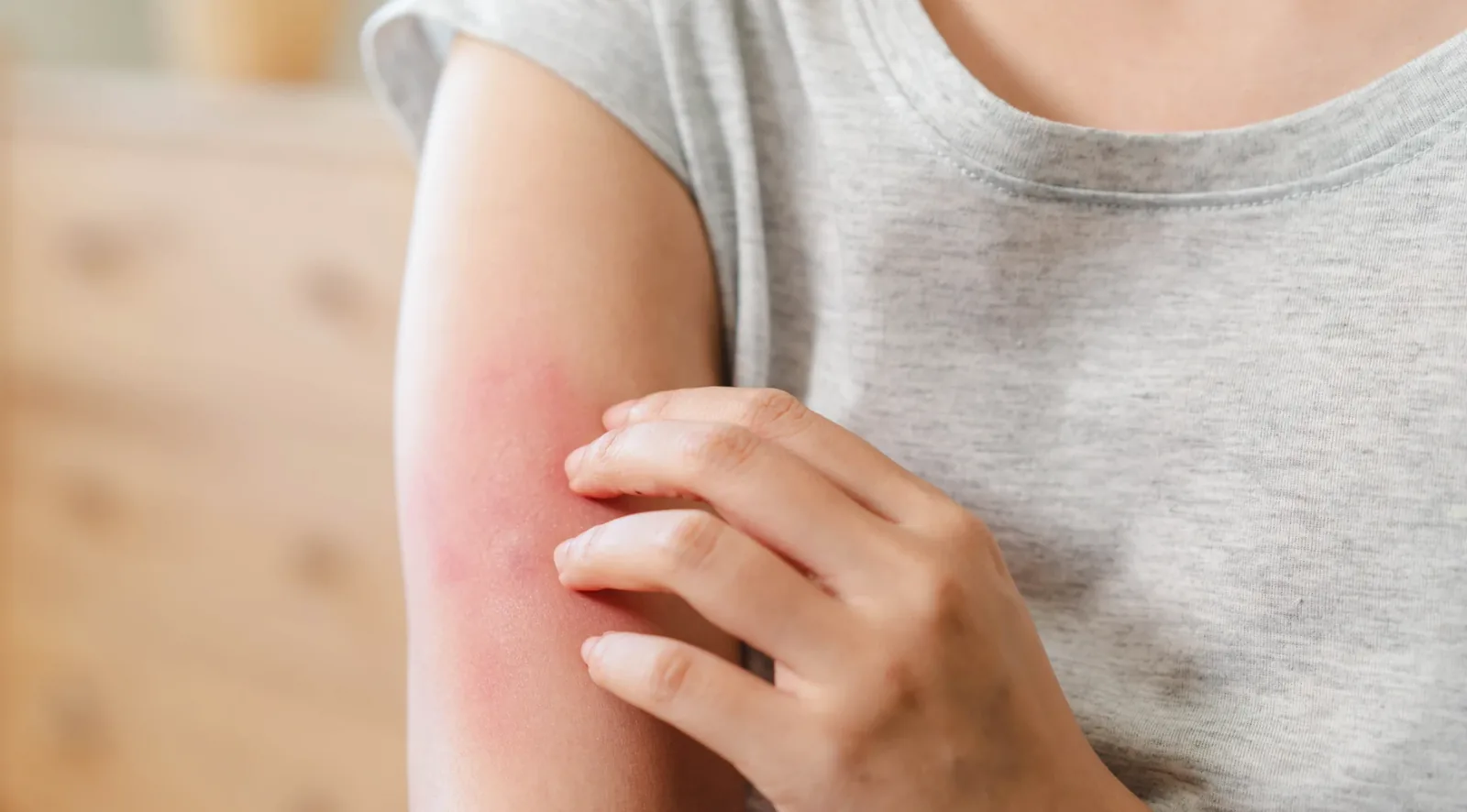
If your skin has recently started to feel tight, dry or maddeningly itchy, and nothing about your routine has changed, you are far from alone. Many women in their forties and early fifties notice this shift before they notice anything else. Consequently, they assume it is a reaction to a new detergent, a change in the weather, or simply “one of those things”. In reality, there is often a hormonal explanation, and understanding it is the first step towards genuine perimenopause itchy skin relief.
In this article, we look at what the medical literature says about why skin changes during perimenopause, what the NHS advises, and how a simple, everyday product such as First Lady Moisturising Arnica & Glycerin Beauty Gel may fit into a comfort focused routine. We’ve also listed the journals and UK health sources behind each point at the end so that you can read the evidence yourself.
What Is Perimenopause, and Why Does It Affect the Skin?
Perimenopause is the transition phase leading up to menopause, when the ovaries gradually produce less oestrogen, and the hormone’s levels rise and fall unpredictably. It can last for several years. According to the NHS, common symptoms include irregular periods, hot flushes, and mood changes. The NHS also lists skin changes, including dry, itchy skin, as other possible symptoms.
The reason is simple: your skin is a hormone responsive organ. Oestrogen receptors are present throughout the skin, and the hormone helps to support collagen, elastin, natural oils and water retention. When oestrogen fluctuates and then declines, the skin’s structure and function can change. A four-part review series in Clinical and Experimental Dermatology explains that the low-oestrogen state of menopause affects skin structure and function, and that as many as 64% of women attending menopause clinics report skin problems (Kamp et al., 2022).
Why Perimenopause Skin Feels Dry, Tight and Itchy
Several overlapping changes help to explain the sensation. Let us look at them one at a time.
1. A weaker skin barrier
The outermost layer of your skin, the stratum corneum, works like a wall. It keeps moisture in and irritants out. Oestrogen helps to maintain the lipids (fats) and natural moisturising factors within that wall. As a result, when oestrogen dips, the barrier can become less efficient, and more water escapes through the skin. Scientists call this transepidermal water loss. In practical terms, that means skin can feel parched even when you moisturise once a day.
2. Less collagen and thinner skin
Collagen gives skin its plumpness and resilience. Research reviewed in the dermatology literature indicates that collagen content and dermal thickness fall after menopause, and that the decline begins around the perimenopausal years. Thinner, less cushioned skin tends to be more reactive. Therefore, everyday triggers such as hot showers, fabric friction and central heating can feel more irritating than they once did.
3. Dryness that irritates nerve endings
Itching, known medically as pruritus, is closely tied to dryness. Dry, less flexible skin can develop tiny cracks and surface inflammation, which in turn stimulates the nerve endings that signal itch. Kamp and colleagues identify xerosis (abnormally dry skin) and pruritus as recognised skin associations of menopause.
4. A tendency towards sensitivity and eczema-type reactions
Perimenopausal skin can also become more prone to irritation. Observational studies suggest that eczematous conditions are among the more commonly reported skin problems in menopausal women. As a result, a product that once felt perfectly fine may suddenly sting or prickle.
What Does the NHS Recommend for Itchy Skin?
The NHS advice on itchy skin is refreshingly practical, and it applies well to the perimenopause years. In summary, it recommends:
- Using an unperfumed moisturiser or emollient regularly
- Avoiding perfumed soaps, deodorants and moisturisers
- Avoiding tight clothing and wool or synthetic fabrics next to the skin
- Taking cool or lukewarm baths rather than hot ones
- Patting or tapping the skin instead of scratching
- Keeping nails clean, short and smooth.
- Using laundry products designed for sensitive skin
It also advises seeing your GP if the itching affects your daily life, does not improve with self-care, keeps coming back, covers your entire body, or comes with a new rash or lump. This matters because persistent itching can occasionally have causes unrelated to hormones.
Where a Moisturising Gel Fits In
Because the underlying issue is often a compromised, water-losing barrier, the most useful thing a topical product can do is support hydration and comfort. That is why humectants and soothing botanicals often appear in products for dry, itchy skin. That’s where First Lady Moisturising Arnica & Glycerin Beauty Gel comes in.
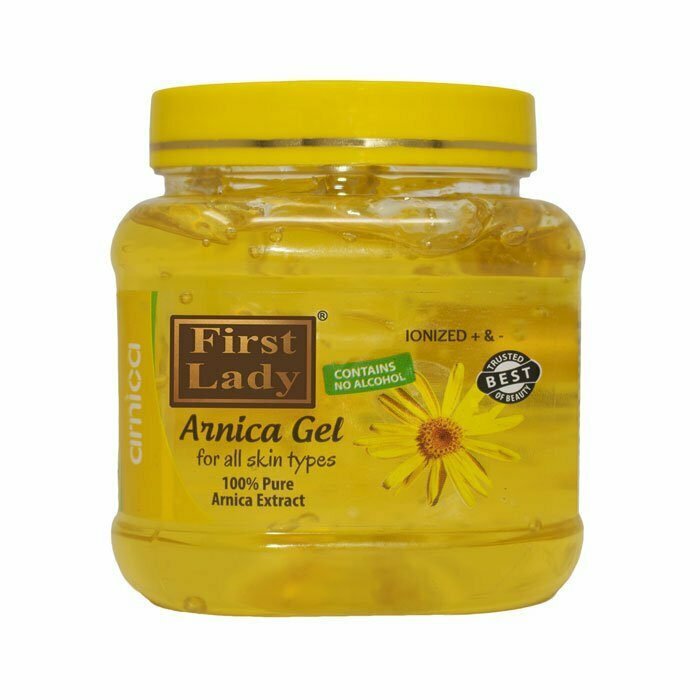
This non-sticky, fast-absorbing gel is designed for both face and body. It is formulated to moisturise and soothe skin, and to help with dry, itchy conditions. The headline ingredients, glycerin and arnica, are each backed by published research, so let us take them in turn.
Glycerin: a well-studied humectant
Glycerin (also called glycerol) is one of the most thoroughly researched moisturising ingredients in dermatology. A review in the British Journal of Dermatology (Fluhr et al., 2008) describes how glycerol improves stratum corneum hydration, skin barrier function and skin mechanical properties, and protects against irritating stimuli. In addition, topical glycerol-containing products have been shown to improve skin in conditions marked by xerosis and impaired barrier function. An earlier clinical study by Lodén and colleagues found that a cream containing 20% glycerin improved skin barrier properties (Lodén et al., 2001).
For someone dealing with perimenopausal dryness, this is highly relevant. Since the underlying issue is water loss, an ingredient that attracts and holds water at the surface makes practical sense.
Arnica: a traditional soothing botanical
Arnica montana has a long history of use in topical creams and gels. Its flowers contain natural compounds called sesquiterpene lactones, including helenalin. These compounds are one reason researchers are interested in arnica’s soothing properties.
Laboratory studies offer clues about how arnica works. One study found that helenalin affected NF-κB, a pathway involved in the body’s inflammatory response. Another study found that arnica extracts showed activity in tests of inflammation-related pathways. Researchers have also studied how arnica’s compounds move into the outer layers of skin when applied topically.
Together, these findings help explain why arnica is a popular ingredient in skincare designed to leave skin feeling calm and comfortable. First Lady includes arnica in its gel for this skin soothing purpose.
How to Use the Gel as Part of a Calming Routine
A gel is only as helpful as the routine around it. Here is a simple approach many women find manageable:
- Bathe or shower in lukewarm water. Hot water strips the skin’s natural oils, so keep it cool and brief.
- Pat dry gently. Leave the skin slightly damp rather than rubbing it completely dry.
- Apply the gel straight away. Moisturising within a few minutes helps to trap water in the skin. Smooth it over the face, arms, legs, or wherever it feels tight and itchy.
- Reapply as needed. Because the formula is light and non-sticky, it is easy to top up during the day, for example on hands or forearms.
- Wear breathable fabrics. Cotton and other soft, natural fibres reduce friction on sensitive skin.
- Patch test first. Apply a small amount to the inner forearm and wait 24 hours before using it more widely.
For the perimenopause years, consistency matters more than complexity. Two or three well-chosen habits, repeated daily, will usually do more than a crowded shelf of products.
Everyday Habits That Support Perimenopausal Skin
Beyond topical products, small lifestyle adjustments can help reduce irritation:
- Choose fragrance-free products. Following the NHS advice, avoid perfumed soaps and body washes that can worsen dryness.
- Stay hydrated and eat well. Adequate fluids and a balanced diet support overall skin health, although they cannot replace topical moisturising.
- Protect from the sun. Ultraviolet exposure damages collagen and worsens dryness, so a daily SPF remains important.
- Manage stress and sleep. Stress can heighten the perception of itch, while poor sleep makes discomfort feel worse.
- Keep the room cool at night. Overheating can trigger itching, particularly if you experience night sweats.
Who Should Be Careful, and When to See Your GP
Arnica is generally used only on intact skin. Do not apply arnica products to open wounds, broken or badly inflamed skin. Some people are sensitive to plants in the daisy family (Asteraceae), which includes arnica. Hence, a patch test is sensible, and you should stop using the product if redness, stinging or a rash develops. Although research suggests the body has built-in mechanisms that limit arnica hypersensitivity (Lass et al., 2008), individual reactions can still occur.
Please see your GP if:
- The itching is intense, constant or keeps you awake.
- It affects your whole body.
- You develop a new rash, lump, swelling, or open sores.
- Symptoms do not improve with self-care
- You are experiencing other significant menopausal symptoms and would like to discuss your options.
Your GP can also check for other causes of itching, such as thyroid problems, iron deficiency or an underlying skin condition, and can talk you through medical options for menopausal symptoms if appropriate.
Frequently Asked Questions
Can perimenopause really cause itchy skin?
Yes. The NHS lists dry and itchy skin among the symptoms of perimenopause, and dermatology reviews link falling oestrogen with reduced barrier function, lower collagen and increased dryness.
Is the First Lady Arnica Beauty Gel suitable for the face and body?
It is formulated for use on both face and body. As with any new product, patch test first, particularly if your skin is sensitive.
How often should I moisturise dry, itchy skin?
The NHS advises using an unperfumed moisturiser regularly. Many people apply after washing and again whenever skin feels tight.
Will a gel cure perimenopausal itching?
No cosmetic product can cure a hormonal change. However, keeping the skin hydrated and comfortable can meaningfully ease day-to-day dryness and the itch that comes with it.
Final Thoughts
Perimenopause itchy skin is common, real and rooted in measurable biological change. Falling oestrogen affects the skin barrier, collagen, and hydration, and the result is skin that feels dry, thin, and unpredictable. Fortunately, gentle, consistent care makes a noticeable difference. Combining NHS-backed habits with a light, hydrating product such as First Lady Moisturising Arnica & Glycerin Beauty Gel, which pairs the humectant glycerin with soothing arnica, is a simple and affordable way to look after your skin through this transition.
Shop First Lady Arnica & Glycerin Beauty Gel
Related reading: 5 Signs Mature Skin Needs a Richer Moisturiser
References
- NHS. Menopause: Symptoms. https://www.nhs.uk/conditions/menopause/symptoms/
- NHS. Itchy skin. https://www.nhs.uk/conditions/itchy-skin/
- Kamp E, Ashraf M, Musbahi E, DeGiovanni C. Menopause, skin and common dermatoses. Part 2: skin disorders. Clinical and Experimental Dermatology. 2022;47(12):2117-2122. Oxford Academic. https://academic.oup.com/ced/article/47/12/2117/6966236
- Fluhr JW, Darlenski R, Surber C. Glycerol and the skin: holistic approach to its origin and functions. British Journal of Dermatology. 2008;159(1):23-34. https://onlinelibrary.wiley.com/doi/10.1111/j.1365-2133.2008.08643.x
- Lodén M, Andersson AC. The influence of a cream containing 20% glycerin and its vehicle on skin barrier properties. International Journal of Cosmetic Science. 2001;23(2):115-119. https://onlinelibrary.wiley.com/doi/abs/10.1046/j.1467-2494.2001.00060.x
- Kriplani P, Guarve K, Baghel US. Arnica montana L. - a plant of healing: review. Journal of Pharmacy and Pharmacology. 2017;69(8):925-945. https://onlinelibrary.wiley.com/doi/10.1111/jphp.12724
- Wagner S, Suter A, Merfort I. Skin penetration studies of Arnica preparations and of their sesquiterpene lactones. Planta Medica. 2004;70(10):897-903. PubMed. https://pubmed.ncbi.nlm.nih.gov/15490315/
- Lass C, Vocanson M, Wagner S, et al. Anti-inflammatory and immune-regulatory mechanisms prevent contact hypersensitivity to Arnica montana L. Experimental Dermatology. 2008;17(10):849-857. https://onlinelibrary.wiley.com/doi/abs/10.1111/j.1600-0625.2008.00717.x
Leave a Reply