
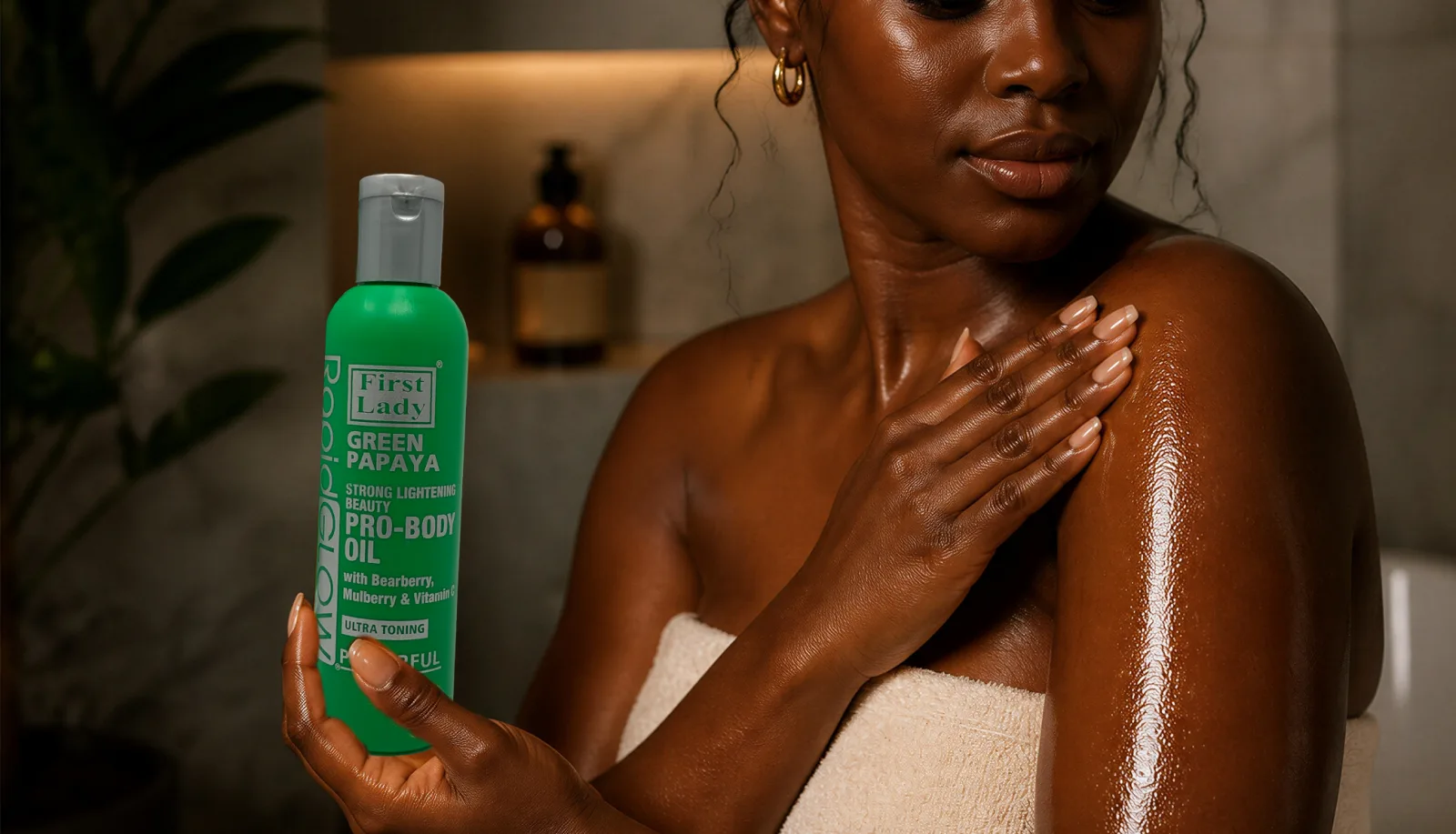
Uneven skin tone, dark marks and dullness can affect how radiant your skin looks. A skin-brightening body oil combines nourishing care with ingredients chosen to help improve the appearance of your complexion.
First Lady Rapid Glow Green Papaya Brightening Beauty Body PRO Oil is designed to brighten the appearance of body skin while providing nourishment. Its featured ingredients include green papaya, niacinamide, bearberry extract, mulberry extract and vitamin C. The lightweight, non-greasy oil comes in a 200ml bottle.
Here is a simple guide to the benefits associated with these ingredients and why they are used in brightening skincare.
Green Papaya: The Featured Botanical
Green papaya extract is valued in skincare for its association with a fresher, smoother and more radiant-looking complexion. Papaya contains papain, a protein-breaking enzyme used in some exfoliating formulations to help loosen and remove dead skin cells from the surface.
When a product delivers effective papain activity, this exfoliating action can help reduce the dull appearance caused by surface buildup, revealing skin that looks brighter and feels smoother. A more even surface can also give the complexion a clearer, more luminous appearance.
Papaya contains plant compounds studied for antioxidant activity, which adds to the interest in its use in cosmetic skincare. These qualities make green papaya an appealing botanical for formulations focused on dullness, rough texture and visible radiance.
Its strongest link to brightening is through surface exfoliation: helping refresh the appearance of the skin rather than establishing that the extract itself fades dark spots.
Niacinamide: Helps Improve the Appearance of Uneven Tone
Niacinamide, also known as vitamin B3, is a well-researched ingredient for skin-brightening formulations.
Research published in the British Journal of Dermatology found that niacinamide can reduce the transfer of pigment-containing structures from pigment-producing cells to surrounding skin cells. This mechanism helps explain its benefits for the appearance of hyperpigmentation.
Its main brightening benefits include:
- Helping improve the appearance of uneven skin tone.
- Supporting a more balanced-looking complexion.
- Helping make areas of excess pigmentation less noticeable in suitably formulated products.
Niacinamide is an important part of this oil’s brightening ingredient blend.
Bearberry Extract: A Botanical Ingredient Associated with Arbutin
Bearberry extract is used in brightening skincare because bearberry is a natural source of arbutin.
Arbutin has been studied for its influence on tyrosinase, an enzyme involved in producing melanin, the pigment that gives skin its colour. A scientific review published in Antioxidants examines its pigmentation-related activity and use in cosmetic formulations.
Its benefits in brightening skincare centre on:
- Providing a botanical source of compounds studied for pigmentation.
- Supporting formulations aimed at more even-looking skin.
- Complementing other ingredients chosen for visible radiance.
Bearberry extract is not identical to purified arbutin. Its contribution depends on the extract’s composition and the finished formula.
Mulberry Extract: Supports the Brightening Focus
Mulberry is another botanical ingredient investigated for its potential effects on pigmentation.
A clinical study published in the Journal of Drugs in Dermatology tested a preparation containing 75% mulberry extract oil against a placebo in 50 people with melasma. This research shows that specific mulberry preparations have been investigated in people, alongside laboratory research into botanical brightening ingredients.
Why mulberry is included in brightening skincare:
- It has been investigated for improving pigmentation.
- It complements formulas focused on uneven tone.
- It adds to the oil’s botanical ingredient blend.
The study used a particular preparation, so its results cannot be assumed for a different mulberry-containing oil.
Vitamin C: Antioxidant Care and Brightening Potential
Vitamin C is valued in skincare for its antioxidant activity and its role in normal collagen formation.
Vitamin C’s key skincare benefits include:
- Antioxidant activity that helps counter oxidative processes.
- Potential support for a more even-looking skin tone.
- A biological role in normal collagen formation.
In a cosmetic product, these benefits depend on the form of vitamin C, its stability, concentration and delivery. Vitamin C is a brightening and antioxidant ingredient; it should not automatically be described as an exfoliant.
What Does First Lady Green Papaya Body Oil Offer?
First Lady describes the oil as intended to:
- Brighten the appearance of skin.
- Improve the look of uneven tone and dark spots.
- Enhance visible glow and radiance.
- Nourish the skin.
- Absorb quickly with a lightweight, non-greasy feel.
Its ingredient blend brings together different approaches to brightening.
Daily Care for a More Radiant-Looking Complexion
A brightening routine should focus on improving the appearance of dullness and uneven tone while keeping skin comfortable.
First Lady Rapid Glow Green Papaya Body PRO Oil combines nourishing body care with a blend of niacinamide, bearberry, mulberry, vitamin C and green papaya. It offers an option for people looking to add a skin-brightening oil to their routine.
Discover First Lady Rapid Glow Green Papaya Brightening Body Oil.
References
- Hakozaki, T. et al. (2002). The effect of niacinamide on reducing cutaneous pigmentation and suppression of melanosome transfer. British Journal of Dermatology, 147(1), 20-31. Read the research
- Boo, Y.C. (2021). Arbutin as a Skin Depigmenting Agent with Antimelanogenic and Antioxidant Properties. Antioxidants, 10(7), 1129. Read the review
- Alvin, G. et al. (2011). A comparative study of the safety and efficacy of 75% mulberry (Morus alba) extract oil versus placebo as a topical treatment for melasma: a randomized, single-blind, placebo-controlled trial. Journal of Drugs in Dermatology, 10(9), 1025-1031. Read the study
- Pullar, J.M., Carr, A.C. & Vissers, M.C.M. (2017). The Roles of Vitamin C in Skin Health. Nutrients, 9(8), 866. Read the review
- Stremnitzer, C. et al. (2015). Papain Degrades Tight Junction Proteins of Human Keratinocytes In Vitro and Sensitizes C57BL/6 Mice via the Skin Independent of its Enzymatic Activity or TLR4 Activation. Journal of Investigative Dermatology, 135(7), 1790-1800. Read the study