
Niacinamide Face Wash: What Niacinamide and Neem Extract Do for Your Skin
Discover how a niacinamide face wash with neem extract brightens skin, controls oil, and fights blemish-causing bacteria. Research-backed benefits, explained.
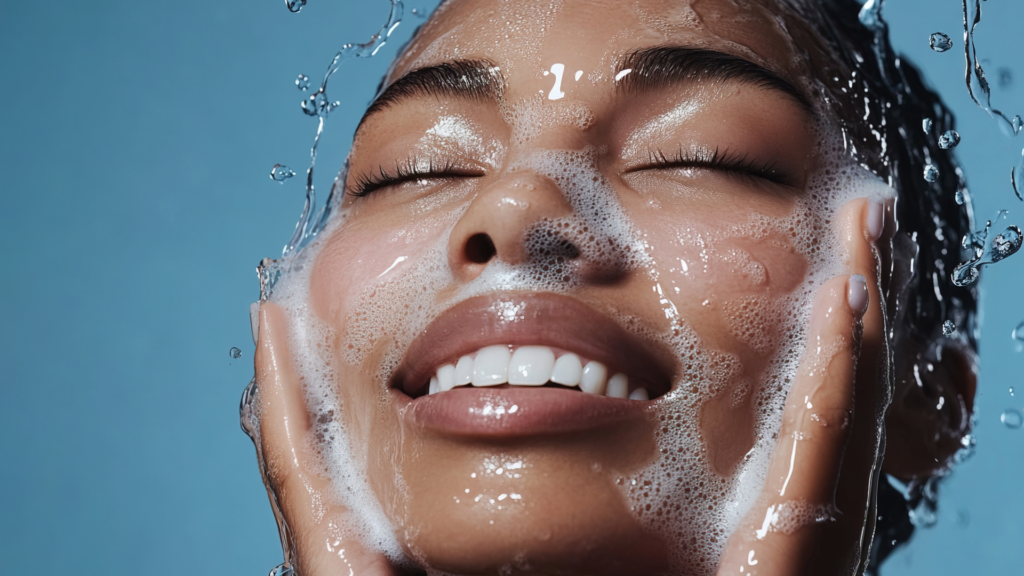
Most skincare conversations centre on serums and moisturisers, yet the foundation of any effective routine is set several steps earlier, at the sink. A niacinamide face wash does more than remove the day’s grime; when formulated correctly, it can begin the brightening and clarifying process before a single drop of serum ever touches the skin. This matters because what you cleanse with determines how well everything applied afterwards works.
Below, we look at the science behind cleansing, niacinamide, and neem extract, and why a foaming face wash built around these ingredients, such as the Maxi Tone Brightening Self-Foaming Face Wash from First Lady, can be a genuinely useful addition to a brightening routine.
We’ve covered the broader case for cleansing-first brightening routines in our full guide to brightening skin through cleansing; here, we go deeper into the ingredient science.
Why Cleansing Matters More Than It’s Given Credit For
It is tempting to treat cleansing as a formality, something to get through before the “real” skincare begins. However, dermatological research consistently frames cleansing as the essential first step of any skincare routine, since it removes the layer of oil, pollution, sweat, and product residue that otherwise sits between the skin and any actives applied afterwards.
The type of cleanser used has a measurable effect on skin health. A landmark review in the American Journal of Contact Dermatitis explains that harsh surfactants can strip away lipids, enzymes, and natural moisturising factors from the skin, weakening the barrier and leading to dryness, tightness, and irritation (Ananthapadmanabhan et al., 2004). Consequently, the formulation of a cleanser, not just the fact that cleansing happens, determines whether the skin is left balanced or compromised.
This is precisely where a targeted formula earns its place. Rather than a plain surfactant wash, a face wash built around niacinamide and neem extract can cleanse thoroughly while simultaneously working toward brighter, clearer-looking skin, so the very first step of the routine is already contributing to the end goal.
Niacinamide: The Ingredient Doing the Heavy Lifting
Niacinamide, also known as Vitamin B3, has become one of the most extensively studied ingredients in cosmetic dermatology, and for good reason. Its benefits are broad, evidence-supported, and relevant to several common skin concerns at once.
Brightening and Uneven Tone
The brightening effect associated with niacinamide is not simply anecdotal marketing language; it has a defined biological mechanism. A widely cited study published in the British Journal of Dermatology found that niacinamide reduces cutaneous pigmentation by suppressing the transfer of melanosomes from melanocytes to keratinocytes, rather than by blocking melanin production at the enzyme level (Hakozaki et al., 2002). In simpler terms, niacinamide interrupts the delivery of pigment to the skin’s surface layers, which is why regular use is associated with a more even-looking tone over time.
Subsequent clinical work has reinforced this. A double-masked, randomised trial comparing 4% niacinamide with 4% hydroquinone, a long-standing benchmark for pigmentation treatment, found niacinamide produced comparable improvements in hyperpigmentation with a notably better tolerability profile (Navarrete-Solís et al., 2011). For anyone concerned about the tingling or sensitivity that can come with stronger actives, this is a meaningful distinction.
-
 -68% Off
£12.49Original price was: £12.49.£3.99Current price is: £3.99.First Lady Maxi Tone Brightening foaming is the first step for the brightening treatment. This foaming face wash cleans the face and neck and lifts dirt and make-up from the skin without over drying the skin.
Oil Control Without Over-Drying
A brightening ingredient that also helps manage oil is unusually effective, and niacinamide does exactly this. In a placebo-controlled trial of 100 Japanese subjects, participants who applied a 2% niacinamide formulation for four weeks showed a significantly lower sebum excretion rate than the placebo group, with the effect becoming more pronounced between weeks two and four (Draelos et al., 2006). This is particularly relevant for a cleanser, since the goal is to lift away excess oil and impurities without disrupting the skin’s natural barrier.
Supporting Barrier Function
Beyond pigmentation and oil, niacinamide also plays a supporting role in barrier health. Research summarised in a 2024 randomised controlled pilot study found that niacinamide contributes to intercellular lipid production, thereby strengthening the stratum corneum’s ability to retain moisture and resist transepidermal water loss (Bijelić et al., 2024). In a cleansing product, this is what separates “clean” from “clean and comfortable”: the skin is not left tight, dehydrated, or reactive afterwards.
Neem Extract: A Traditional Ingredient With Modern Evidence Behind It
Neem (Azadirachta indica) has a long history in traditional skincare, but it has also attracted growing interest from microbiological researchers examining its effect on acne-causing bacteria specifically.
A study testing neem leaf extract against Propionibacterium acnes, the bacterium most commonly associated with blemish formation, found a clear, concentration-dependent antibacterial effect. At full concentration, the extract produced a 16mm zone of inhibition, classified as a strong antibacterial response (Testing the Inhibitory Effect of Neem Leaf Extract, 2024). A separate investigation into neem’s hexane extract identified specific steroidal and phenolic compounds responsible for this activity, further supporting its potential as a natural anti-acne ingredient (Azadirachta indica Hexane Extract, Pharmacognosy Journal). A formulated anti-acne gel using neem extract achieved a similarly strong inhibition zone of 16.2mm against the same bacterium in further testing (Formulation and Evaluation of Anti-Acne Gel, ResearchGate).
In practical terms, this means neem extract in a face wash is not there for tradition alone. It is contributing a genuine antibacterial function that supports clearer, calmer-looking skin, working alongside niacinamide’s brightening and oil-regulating effects rather than duplicating them.
Why Cleanser Formulation Determines Whether You Over-Dry or Not
One of the more persistent myths in skincare is that a cleanser needs to feel “tight” or “squeaky clean” afterwards to have worked properly. Dermatological research says otherwise. Harsh, high-pH surfactant systems can increase stratum corneum swelling and disrupt lipid organisation, which is what actually causes that stripped, dehydrated feeling, not evidence of a superior clean (Cosmetics & Toiletries, Facial Cleansing with Mild Surfactants).
A well-formulated foaming face wash should instead lift dirt, oil, and makeup effectively while leaving the barrier intact. This is the balance a niacinamide and neem-based formula aims for: thorough impurity removal alongside barrier-conscious ingredients, so the skin is refreshed rather than depleted.
Why Cleansing Should Always Come Before Serums and Creams
Skincare works in layers, and each layer depends on the one beneath it being properly prepared. Serums, brightening treatments, and moisturisers are formulated to absorb into clean skin. If the surface is still carrying oil, sweat, sunscreen residue, or environmental pollutants, active ingredients applied on top have to compete for penetration, or worse, sit on top of a barrier already compromised by unremoved debris.
This is why cleansing is consistently positioned as step one, not a preliminary chore, in any serious skincare sequence. A brightening face wash gives the day’s or evening’s skincare goals a head start before the rest of the routine even begins, priming the skin so that everything that follows has a genuinely clean, receptive surface to work with.
Bringing It Together: What This Means for Your Routine
The evidence points to a straightforward conclusion: the cleansing step is not neutral; it is either working for your skin or against it. A face wash formulated with niacinamide and neem extract, such as the First Lady Maxi Tone Brightening Self-Foaming Face Wash, is positioned to do the former. Niacinamide contributes clinically supported brightening, oil regulation, and barrier support, while neem extract adds a research-backed antibacterial function specifically relevant to blemish-prone skin.
Used consistently, and paired with sun protection given the brightening ingredients’ sensitivity to light, this kind of formula turns the first step of a skincare routine into an active contributor to clearer, more even-looking skin, rather than simply a prelude to it.
Patch test recommended: As with any active-ingredient formula, it’s worth testing on the inner elbow overnight before full facial use, particularly for those with sensitive skin.
References
- Hakozaki, T., et al. (2002). The effect of niacinamide on reducing cutaneous pigmentation and suppression of melanosome transfer. British Journal of Dermatology. pubmed.ncbi.nlm.nih.gov/12100180
- Navarrete-Solís, J., et al. (2011). A Double-Blind, Randomised Clinical Trial of Niacinamide 4% versus Hydroquinone 4% in the Treatment of Melasma. Dermatology Research and Practice, NCBI PMC. ncbi.nlm.nih.gov/pmc/articles/PMC3142702
- Draelos, Z.D., et al. (2006). The effect of 2% niacinamide on facial sebum production. Journal of Cosmetic and Laser Therapy, 8(2). pubmed.ncbi.nlm.nih.gov/16766489
- Bijelić, K., et al. (2024). Pilot Study on the Effects of a Cosmetic Serum Containing Niacinamide, Postbiotics and Peptides on Facial Skin in Healthy Participants: A Randomised Controlled Trial: life, NCBI PMC. ncbi.nlm.nih.gov/pmc/articles/PMC11727686
- Testing the Inhibitory Effect of Neem Leaf Extract (Azadirachta indica) on Acne-Causing Bacteria Propionibacterium acnes (2024). ResearchGate. researchgate.net/publication/383504298
- Azadirachta indica Hexane Extract: Potent Antibacterial Activity Against Propionibacterium acnes. Pharmacognosy Journal. phcogj.com/article/1794
- Formulation and Evaluation of Anti-Acne Gel of Azadirachta Indica Extract Herbal Product. ResearchGate. researchgate.net/publication/377975255
- Ananthapadmanabhan, K.P., et al. (2004). Cleansing without compromise: the impact of cleansers on the skin barrier and the technology of mild cleansing. Dermatologic Therapy, PubMed. pubmed.ncbi.nlm.nih.gov/14728695
- British Association of Dermatologists: Skin Care Advice
- NHS: Skin Conditions and Skincare Guidance
- The British Skin Foundation: Skincare Research