
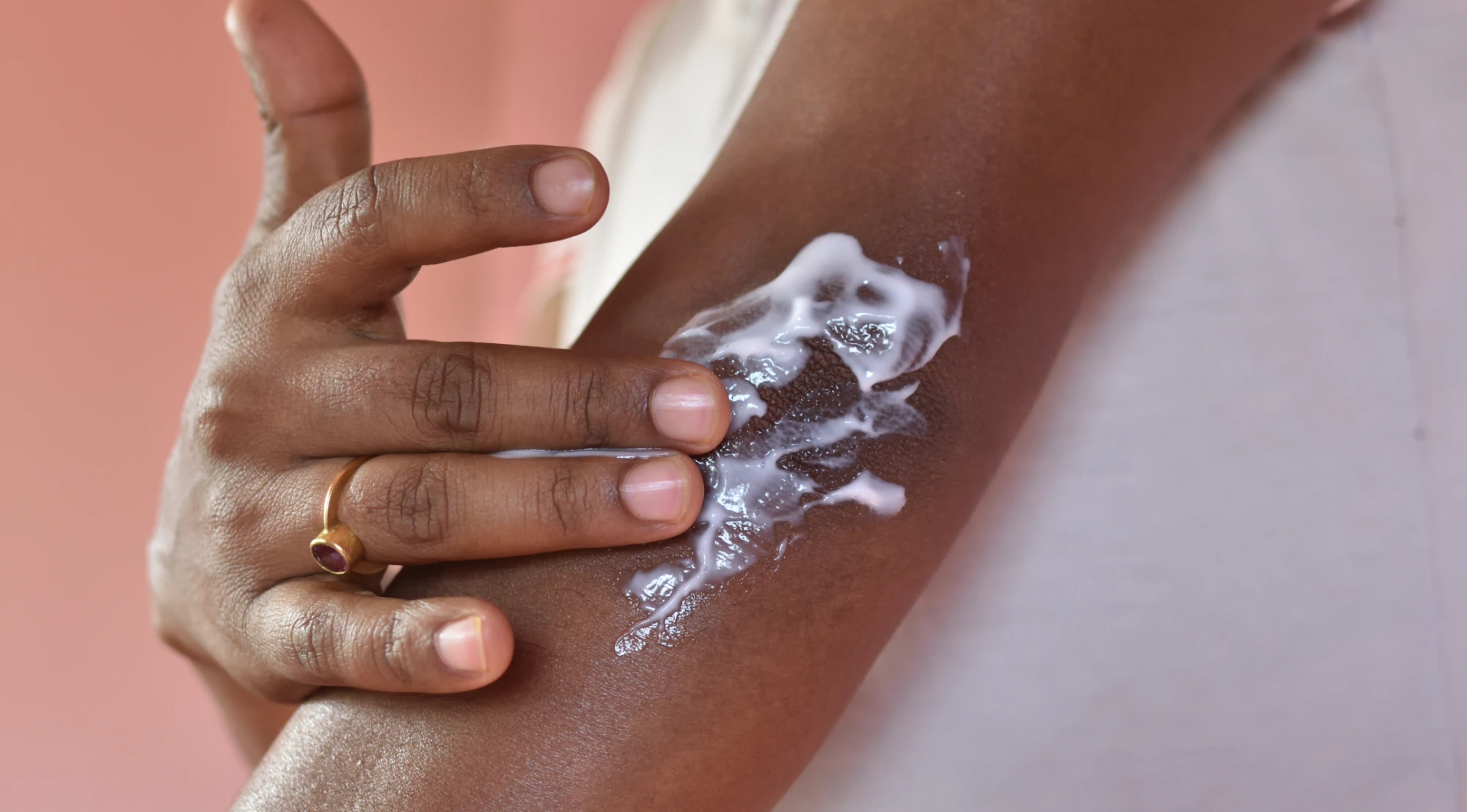
Quick answer: Lactic acid is an alpha-hydroxy acid (AHA) used in skincare to help smooth the skin surface and support hydration, so skin can look brighter and more even over time.[1][2] The Fast Active Brightening Body Milk Lotion (750ml) from First Lady London contains lactic acid as its active ingredient, so you can bring it into your body-care routine.
Dull, uneven skin tone can make you feel less confident, and the right skincare ingredients can help. Lactic acid is one of the best-known brightening ingredients and is widely used in cosmetic products.[1] Here is what it does, what the research says and how to use it.
What is lactic acid?
Lactic acid is an alpha-hydroxy acid. AHAs are used in many cosmetic and skincare products, and reviews describe uses ranging from photoaged skin to acne and uneven pigmentation.[1] Lactic acid works on the surface and upper layers of the skin, which is why it is used for smoothness, texture and tone.[2]
How lactic acid helps skin look brighter
A smoother skin surface
In one study, people applied 5% or 12% lactic acid twice a day for 3 months. Both strengths improved skin smoothness and texture, and the 12% strength also changed the deeper layers of the skin.[2] The concentration in the First Lady body milk is not stated on its product page, so these figures show how the ingredient behaves rather than what this bottle will do. Smoother skin also reflects light more evenly, which is part of why it looks brighter.
Hydration and the skin barrier
In laboratory work on skin cells and in tests on people, lactic acid increased the skin’s ceramides, the fats that help hold the skin barrier together. Lotions containing lactic acid also improved barrier function and made skin more resistant to dryness.[3] Well-hydrated skin looks plumper and more luminous.
Uneven tone and dark marks
Reviews note that hydroxy acids are used in products aimed at pigmentation, although how they work on pigment still needs more research.[1] In a small clinical study of 24 people with melasma, a clinician applied a strong 92% lactic acid peel every 3 weeks. Skin improved on a standard severity score and the result was as good as a comparison peel.[4] That is a professional treatment, not a body lotion, so it shows what lactic acid can do in a clinic rather than what a cosmetic will do at home.
What results to expect
Brightening is gradual and results vary from person to person. The product page says the body milk needs regular use and consistency for the best glow. In the study above, the benefits were measured after 3 months of twice-daily use.[2] Be patient and keep to a steady routine.
Who it suits
The product page says the body milk is suitable for sensitive skin and for all skin types. Any exfoliating acid can still cause irritation in some people, so patch test on a small area first. If you are pregnant or breastfeeding, have a skin condition, or have dark patches that are changing or not fading, ask a pharmacist or GP before using it.
Protect your skin from the sun
Safety reviews of hydroxy acids focus on how they affect sun-exposed skin, and AHA products can make skin more sensitive to the sun.[1] Use a sunscreen of SPF 30 or higher during the day. This matters whenever you use brightening ingredients, and it helps stop new dark marks from forming.
Complete your brightening routine
Brightening does not stop at the face. Your body deserves the same attention, and a moisturising step helps keep skin comfortable.
The Fast Active Brightening Body Milk Lotion comes in a 750ml bottle for £10.49. Lactic acid is its active ingredient, and the product page describes it as a lotion made to help gradually even the look of dark spots, hyperpigmentation and skin discolouration while leaving skin smooth and hydrated.

Featured product
Fast Actives Brightening Body Milk Lotion (750ml)
A lactic acid body milk for the look of a smoother, more even body skin tone. Suitable for all skin types.
£10.49
Shop nowHow to use
- Cleanse your skin with a gentle cleanser.
- Apply the Brightening Body Milk to clean skin on the areas you want to care for.
- Use it regularly. The product page says consistency is what gives the best glow.
- Use an SPF 30 or higher sunscreen during the day.
Patch test before first use. If your skin feels sore or burns, rinse the product off and stop using it. Brightening takes time and results vary, so use it consistently and be patient.
The bottom line
Lactic acid is a well-studied ingredient that helps smooth the skin surface, supports hydration and is used to help even the look of tone. You do not need a complicated routine to benefit from it. Pair it with daily sunscreen and a little patience.
Shop the Fast Active Brightening Body Milk Lotion 750ml for £10.49, or browse our full brightening range. You can also read about another brightening favourite in our turmeric and saffron serum guide.
Frequently asked questions
The product page says the Brightening Body Milk is suitable for sensitive skin. Any exfoliating acid can still cause irritation in some people, so patch test on a small area first and stop using it if your skin becomes sore or red.
Results are gradual and vary from person to person. The product page says regular use and consistency are needed, and in one study people used lactic acid twice a day for 3 months before the changes were measured.
The Brightening Body Milk is made as a body lotion, so use it on the areas of the body you want to care for. Keep it away from your eyes and mouth.
Yes. Hydroxy acid products can make skin more sensitive to the sun, so use an SPF 30 or higher sunscreen during the day to protect your skin and help prevent new dark marks.
Cosmetics help the look of uneven skin tone rather than treating a medical condition. In a small clinic study, a strong lactic acid peel applied by a clinician improved melasma, but that is a professional treatment and not the same as a body lotion. If you have dark patches that are changing or not fading, ask a pharmacist, GP or dermatologist.
References
- Kornhauser A, Coelho SG, Hearing VJ. Applications of hydroxy acids: classification, mechanisms, and photoactivity. Clinical, Cosmetic and Investigational Dermatology. 2010;3:135-142. doi:10.2147/CCID.S9042 (PubMed 21437068)
- Smith WP. Epidermal and dermal effects of topical lactic acid. Journal of the American Academy of Dermatology. 1996;35(3 Pt 1):388-391. doi:10.1016/s0190-9622(96)90602-7 (PubMed 8784274)
- Rawlings AV, Davies A, Carlomusto M, et al. Effect of lactic acid isomers on keratinocyte ceramide synthesis, stratum corneum lipid levels and stratum corneum barrier function. Archives of Dermatological Research. 1996;288(7):383-390. doi:10.1007/BF02507107 (PubMed 8818186)
- Sharquie KE, Al-Tikreety MM, Al-Mashhadani SA. Lactic acid chemical peels as a new therapeutic modality in melasma in comparison to Jessner’s solution chemical peels. Dermatologic Surgery. 2006;32(12):1429-1436. doi:10.1111/j.1524-4725.2006.32352.x (PubMed 17199649)
Leave a Reply