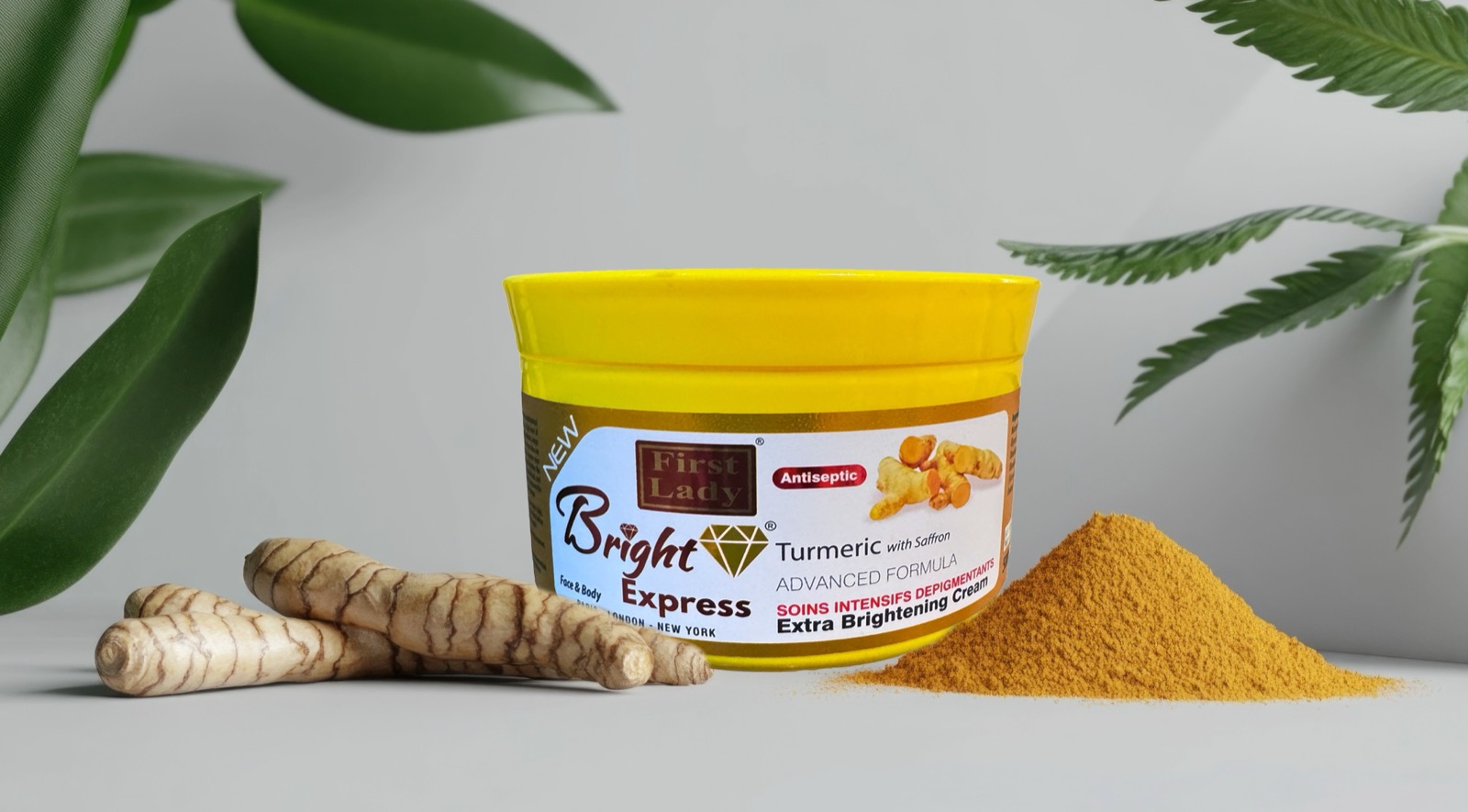
Is Kojic Acid Safe to Use Every Day?
For most people, yes. Kojic acid is generally considered safe for daily use when it’s formulated into a cream at a cosmetic strength, such as First Lady’s Bright Express Turmeric with Saffron Extra Brightening Face & Body Cream. That said, “safe for most people” isn’t the same as “right for everyone from day one”.
If you have sensitive or reactive skin, it’s worth easing in rather than applying twice daily straight away. Start with once-a-day use for the first week or two, watch for redness, tightness or peeling, and only move to twice-daily application once your skin has tolerated it well. A patch test on the inner arm for 24 hours before your first full application is a sensible precaution, particularly if you’ve reacted to brightening or exfoliating products before.
Because ingredients like kojic acid can make skin more photosensitive, daily use should always be paired with daily sun protection, not layered on top of unprotected sun exposure.
How Long Does It Take to See Results From a Turmeric Kojic Acid Cream?
Skin renews itself on a roughly four to six week cycle, and pigmentation fades as that cycle turns over, not overnight. Most people notice softer, better-hydrated skin within the first week or two, but visible changes in tone and dark spots typically take four to eight weeks of consistent, twice-daily use to become noticeable, with continued improvement over two to three months.
The biggest variable isn’t the cream, it’s consistency. Skipping days, stopping and starting, or expecting a two-week transformation are the most common reasons people feel a product “isn’t working” when it simply hasn’t been given enough time.
Can This Combination Be Used Alongside Other Active Ingredients?
Generally, yes, but with some care around timing. Turmeric, kojic acid and saffron sit comfortably alongside a moisturiser, sunscreen and most gentle skincare. Where it’s worth being more deliberate is when combining with other actives:
- Vitamin C: usually fine together, and can be complementary since both target brightness, though applying one in the morning and the other in the evening reduces the chance of irritation.
- Retinol or retinoids: best used on alternate evenings rather than at the same time, since combining two actives that both increase cell turnover can overwhelm the skin barrier.
- AHAs/BHAs and other exfoliants: space these out rather than layering on the same application, and reduce frequency of one or the other if you notice sensitivity.
If in doubt, introduce one new active at a time and give your skin a week or two to tell you how it’s responding before adding another.
Does This Cream Replace the Need for Sunscreen?
No, and this is worth being direct about. A brightening cream helps fade existing pigmentation and support a more even tone, but it does not protect skin from the UV exposure that causes new pigmentation in the first place. Skipping sunscreen while using a brightening active can mean undoing your own progress; the NHS and British Association of Dermatologists both point to daily broad-spectrum SPF as central to any brightening routine, not an optional extra.
The simplest routine: brightening cream, then a broad-spectrum SPF 30+ every morning, reapplied through the day if you’re outdoors for long periods.