
Dry, Rough Skin? Why a Himalayan Salt Scrub Could Transform Your Body Care Routine
The Science of Salt Exfoliation for Dry Skin
Discover why a Himalayan salt scrub for dry skin outperforms basic exfoliants for rough legs, dry elbows and flaky knees, backed by dermatology research.
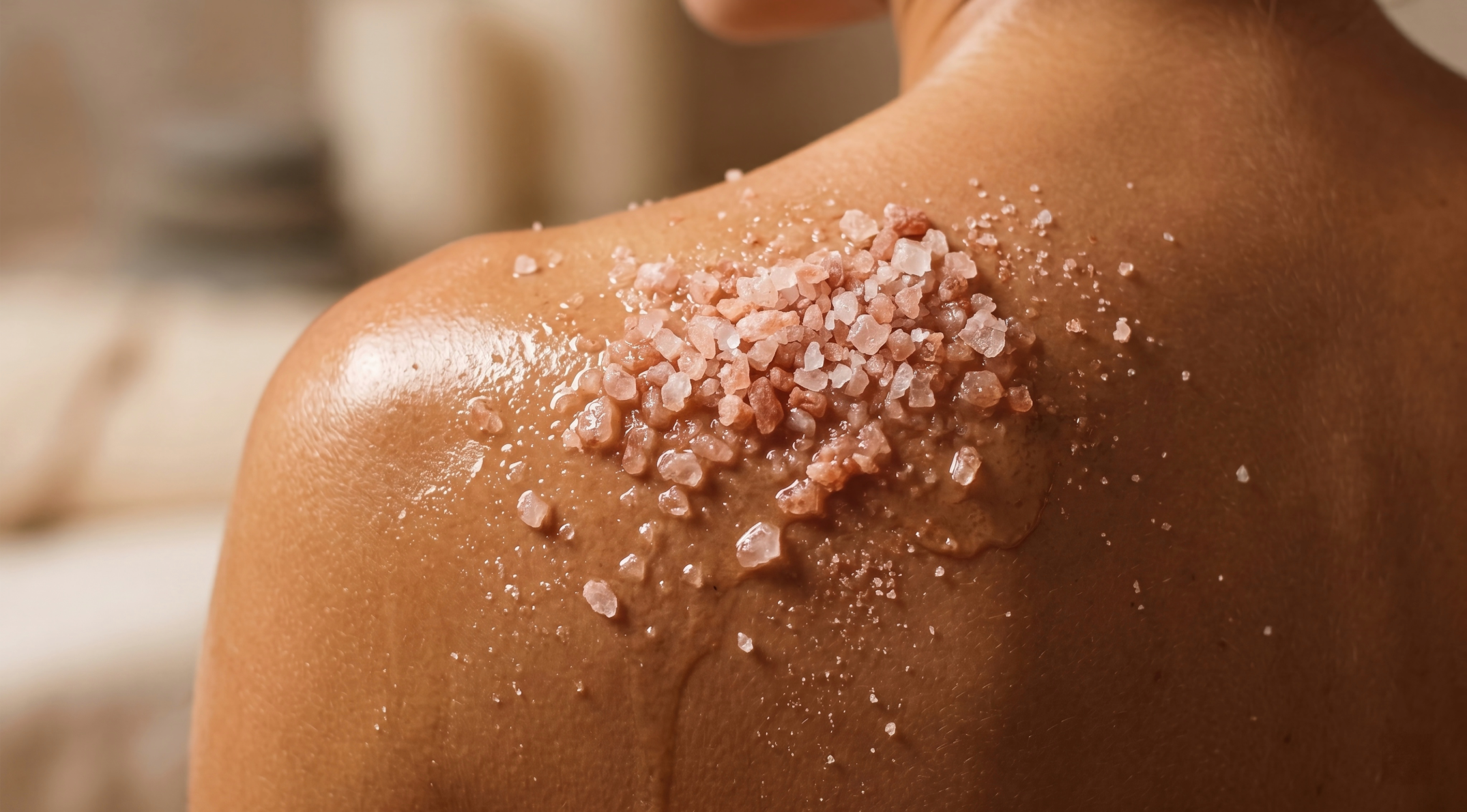
If you’ve ever run a hand down your shin in December and felt something closer to sandpaper than skin, you already know the frustration of dry, rough body skin. Elbows crack. Knees look ashy no matter how much lotion goes on. Dullness sets in, and no amount of concealer or fake tan can quite hide uneven texture. The usual advice, “just moisturise more”, treats the symptom rather than the cause.
The real issue is usually a build-up of dead skin cells that ordinary moisturisers can’t dissolve on their own. This is where a Himalayan salt scrub for dry skin earns its place in a body-care routine: it combines physical exfoliation with nourishing plant oils, working on the problem from two directions at once rather than one.
Why Skin Becomes Rough, Dry and Dull in the First Place
The outermost layer of skin, the stratum corneum, is made up of flattened, dead skin cells (corneocytes) held together by a lipid “mortar” of ceramides, cholesterol and fatty acids. In healthy skin, these cells shed continuously and invisibly in a process called desquamation. When this process slows down, whether from cold weather, low humidity, ageing, frequent hot showers, or simply skipping exfoliation, dead cells accumulate on the surface.
Dermatological research on the stratum corneum has shown that this build-up of unshed corneocytes is directly linked to the rough, flaky, dull appearance most people associate with “dry skin”, even when the deeper skin layers are still adequately hydrated (Rawlings & Harding, International Journal of Cosmetic Science, 2004). In other words, a lot of what looks like dryness is actually a mechanical problem of dead cell accumulation, not just a lack of water or oil.
This explains why moisturiser alone often isn’t enough on areas like elbows, knees and lower legs. These are low-oil-gland zones that shed skin cells more slowly than the face or torso, so they’re naturally more prone to visible texture and flakiness (Draelos, Dermatologic Clinics, 2000).
What Exfoliation Actually Does to Skin
Exfoliation works by mechanically or chemically loosening the bonds between dead corneocytes so they lift away, revealing smoother, more evenly toned skin underneath. Physical exfoliants, such as salt or sugar granules suspended in an oil or cream base, do this through gentle abrasion combined with massage.
Clinical and cosmetic-science literature consistently associates regular, gentle exfoliation with:
- Smoother surface texture, as measured by reduced surface roughness in skin profilometry studies (Piérard et al., Skin Research and Technology, 1999)
- Improved light reflection and perceived skin “glow”, since a smoother surface scatters light more evenly than one covered in flaking, uneven dead skin
- Better penetration of subsequent moisturisers, because removing the outermost dead cell layer allows humectants and emollients applied afterwards to be absorbed more effectively (Lodén, American Journal of Clinical Dermatology, 2003)
The key caution is frequency and gentleness. Over-exfoliation, or exfoliating with granules that are too sharp or angular, can damage the skin barrier and worsen dryness (Draelos, 2000). This is why the type of salt and the base it’s suspended in matters as much as the act of scrubbing itself.
Why Salt Specifically? The Case for Himalayan Salt
Not all exfoliating grains behave the same way on skin. Sugar dissolves quickly and is generally softer. Ground nut shells or seed granules, once common in facial and body scrubs, have sharp, irregular edges that researchers and dermatologists have flagged as a cause of micro-tearing in the skin barrier (Roberts, Cutis, 2016). Himalayan pink salt, by contrast, naturally forms with rounder edges. These crystal structures can be milled to a size appropriate for body use, providing a firm but less aggressive abrasive action than harder or sharper particles.
Himalayan salt is also mineral-rich, typically containing trace amounts of magnesium, potassium, calcium and iron oxide (which gives it its characteristic pink colour), in addition to sodium chloride. While large-scale clinical trials specifically on Himalayan salt for skin are limited, mineral-rich salts have a longer research history more broadly. Dead Sea salt, for example, has been studied for its skin-barrier and hydration effects in dermatology literature, with research published in the Israel Medical Association Journal (Proksch et al., 2005) linking mineral salt bathing to measurable improvements in skin barrier function and reduced roughness in participants with dry skin conditions.
The practical takeaway for body care is straightforward: a mineral salt base provides effective mechanical exfoliation without the sharp-edged risk of harsher scrub particles, while delivering trace minerals to the skin’s surface during use.
Why the Oil Matters Just as Much as the Salt
A dry salt scrub on its own would be too harsh and drying for regular use. This is why a properly formulated salt scrub for dry skin suspends the crystals in nourishing plant oils rather than water or gel. The oil serves two purposes simultaneously.
First, it cushions the salt’s abrasive action, so exfoliation feels like a massage rather than a scrape. Second, and more importantly from a skin-science perspective, plant oils used in body-care formulations, such as sweet almond, jojoba, or coconut oil, contain fatty acids that help reinforce the skin’s lipid barrier. Research on topical plant oils shows that oils rich in oleic and linoleic acid can help reduce transepidermal water loss (TEWL), the rate at which moisture escapes through the skin, when applied after exfoliation (Vaughn et al., Journal of Clinical and Aesthetic Dermatology, 2018).
This combination, exfoliation followed immediately by an occlusive, fatty-acid-rich oil in the very same product, means the newly revealed skin surface is sealed and conditioned in one step, rather than left exposed and more vulnerable to moisture loss until a separate moisturiser is applied.
-
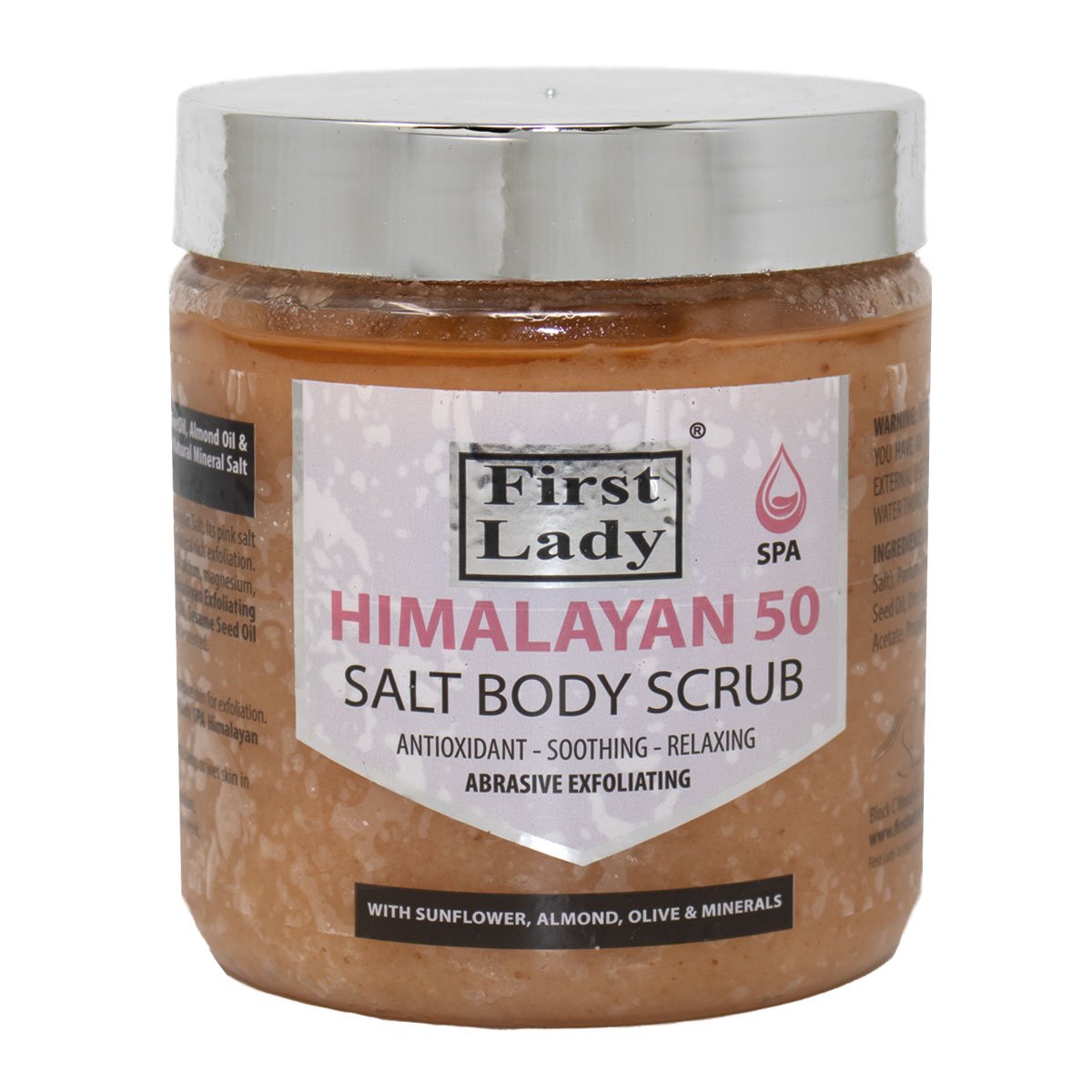 £9.99
Exfoliating Salt Body Scrub is made with natural Himalayan Salt. Its pink salt crystals act as a pore minimiser to help restore smooth, soft skin. The salt grains provide mineral-rich exfoliation.
Read our blog: The Transformative Benefits of Salt Scrubs
Who Benefits Most from a Salt and Oil Scrub
Certain areas of the body are especially well suited to this combined approach because they combine low natural oil production with high friction or exposure:
- Legs, particularly shins, which have fewer sebaceous glands and are frequently exposed to friction from clothing, razors and seasonal dryness
- Elbows, where thicker, less elastic skin combined with constant pressure and friction leads to visible roughness and sometimes darkened patches
- Knees, for similar reasons, especially in people who kneel frequently or have naturally drier skin in that area
- Any area showing flaky or dull texture, where dead skin cell build-up is preventing light from reflecting evenly
How to Use a Himalayan Salt Scrub for Dry Skin Correctly
- Apply to damp, not soaking wet, skin. Excess water dilutes the oil base and reduces the scrub’s slip and effectiveness.
- Use gentle, circular motions. Let the salt do the work; pressing hard increases the risk of micro-abrasions.
- Focus on rough zones such as elbows, knees and lower legs, and spend less time on thinner-skinned areas.
- Rinse thoroughly and pat dry. Avoid rubbing the towel vigorously over freshly exfoliated skin.
- Follow with a moisturiser if the scrub’s oil base needs reinforcing, particularly in colder months.
- Limit use to two to three times weekly. Daily exfoliation is not necessary and can compromise the skin barrier over time (Draelos, 2000).
The First Lady Exfoliating Salt Body Scrub
The Exfoliating Salt Body Scrub from First Lady is formulated around exactly this principle: real Himalayan salt crystals suspended in a nourishing oil base, designed to lift away dead skin and dullness while conditioning the skin underneath in a single step. It’s built for exactly the trouble spots covered in this article: rough legs, dry elbows, flaky knees, and generally uneven, dull-looking skin, without the harshness of sharper, less considered scrub formulas.
The Bottom Line
Rough, dry, dull-looking skin on the legs, elbows and knees is rarely a simple hydration problem. It’s usually a build-up of dead skin cells that ordinary moisturiser can’t shift on its own. Research on skin physiology supports what a good salt scrub for dry skin aims to do: gently exfoliate that build-up while sealing in moisture with skin-conditioning oils, in one step rather than two. Used consistently and gently, a well-formulated Himalayan salt scrub can genuinely change how your skin looks and feels, smoother, more even, and considerably less dull.
References
- Rawlings, A.V. & Harding, C.R. “Moisturization and skin barrier function.” International Journal of Cosmetic Science, 2004.
- Draelos, Z.D. “Cosmetics and skin care products. A historical perspective.” Dermatologic Clinics, 2000.
- Piérard, G.E. et al. “Comparative effects of hydrating agents on skin surface.” Skin Research and Technology, 1999.
- Lodén, M. “Role of topical emollients and moisturisers in the treatment of dry skin barrier disorders.” American Journal of Clinical Dermatology, 2003.
- Roberts, W.E. “Chemical peeling in ethnic/dark skin.” Cutis, 2016.
- Proksch, E. et al. “Bathing in a magnesium-rich Dead Sea salt solution improves skin barrier function.” Israel Medical Association Journal, 2005.
- Vaughn, A.R. et al. “Natural oils for skin-barrier repair: ancient compounds now backed by modern science.” Journal of Clinical and Aesthetic Dermatology, 2018.
- NHS: Dry skin advice
- British Skin Foundation
- National Eczema Society: Skin barrier and moisturising