
Why Arnica Is Such a Popular Botanical in Skin-Care Products
Discover the science behind arnica gel for bruising, muscle aches and irritated skin, backed by clinical research, and how First Lady’s Arnica Beauty Gel puts it to work.
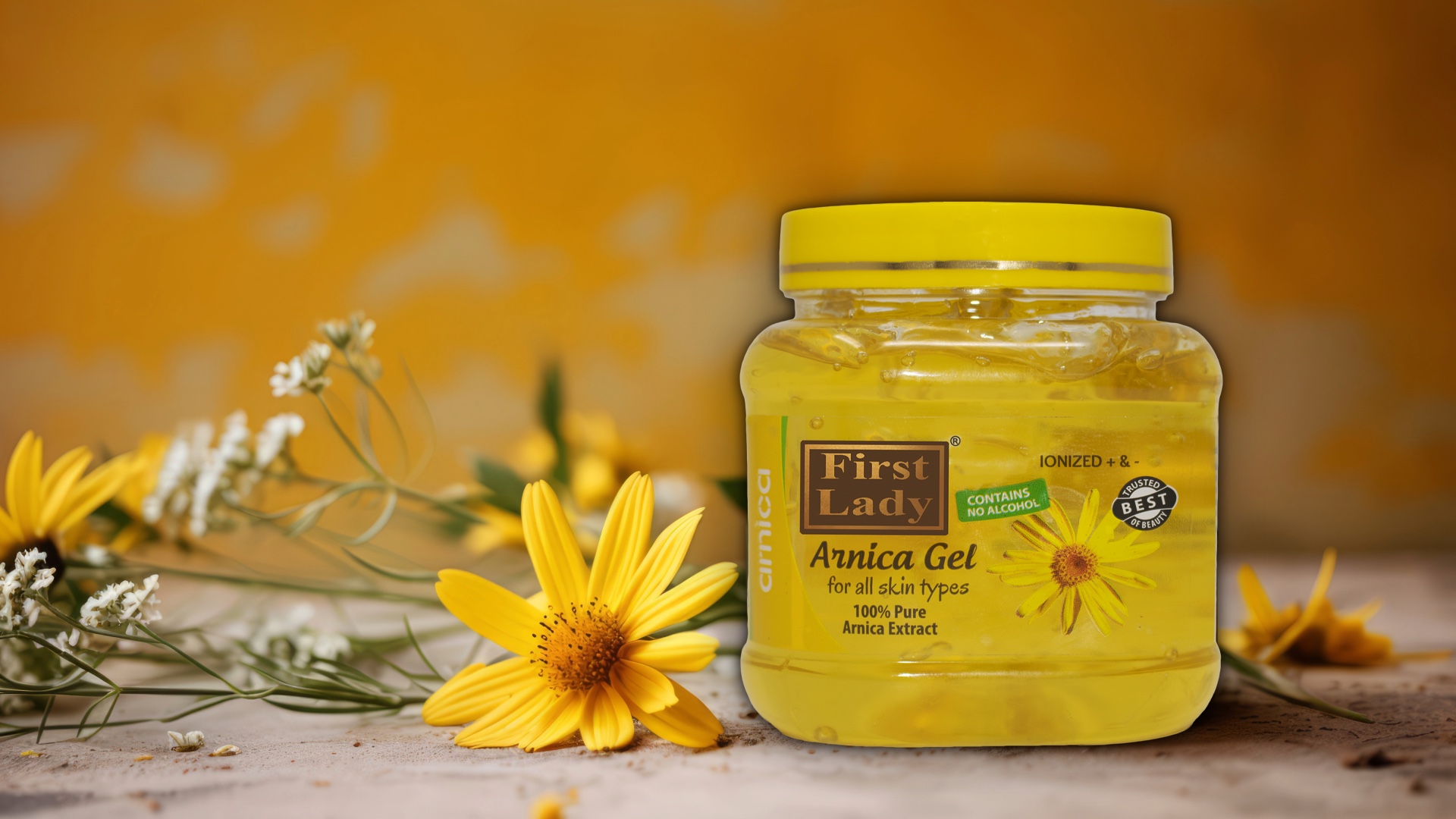
Walk down the natural skincare aisle, and you’ll notice one small yellow flower keeps reappearing on ingredient labels: arnica. It’s been a staple of European folk medicine for centuries. Yet, it’s only in the last few decades that researchers have started to explain, in molecular detail, why it actually works. Consequently, arnica has moved from grandmother’s remedy cabinet into serious dermatological and sports-medicine research, and from there onto the ingredients panel of products like First Lady’s Arnica Beauty Gel.
This article looks at what the clinical evidence actually says about arnica, how it’s thought to work at a cellular level, and where it fits into a sensible skincare and recovery routine.
What Is Arnica Montana?
Arnica montana is a perennial flowering plant native to the mountainous regions of Europe, commonly known as wolf’s bane, mountain tobacco, or leopard’s bane. Traditionally, extracts of the dried flower heads have been applied topically to bruises, sprains, and sore muscles. Today, the World Health Organisation formally recognises the “traditional” topical use of Arnica for “pain and inflammation caused by minor sprains and accidents, such as bruises and hematomas” (WHO monograph, cited in MDPI, 2024).
Because it’s applied to the skin rather than ingested, arnica has become a popular addition to gels, balms, and creams aimed at soothing minor everyday complaints without the systemic side effects associated with oral anti-inflammatories.
The Science Behind Arnica’s Anti-Inflammatory Power
So what actually happens when arnica meets skin? The flower heads contain sesquiterpene lactones, most notably a compound called helenalin, which researchers have identified as the plant’s primary active constituent (Journal of Biological Chemistry; PubMed).
Helenalin works by directly targeting NF-κB, a transcription factor that switches on the body’s inflammatory gene expression. Specifically, it alkylates the p65 subunit of NF-κB, effectively blocking the signal that would otherwise trigger swelling, redness, and the cascade of inflammatory proteins involved in a bruise or minor injury. Notably, this mechanism is distinct from that of conventional NSAIDs like ibuprofen or aspirin, meaning arnica works through a genuinely different biochemical pathway rather than simply mimicking painkillers (PubMed, 1997).
This selectivity also explains why arnica has such a long history specifically in bruise and swelling management, rather than as a general-purpose remedy: its target is the exact molecular switch that governs that kind of localised inflammation.
Arnica Gel for Mild Bruising: What the Clinical Evidence Shows
Bruising is where arnica has the strongest research backing. In a prospective, double-blinded controlled study, Chaiet and Marcus gave patients perioperative Arnica montana before rhinoplasty surgery. They found a significant reduction in the visible bruise area after seven days, and in bruise colour intensity after ten days, compared with placebo (summarised in MDPI, 2024).
Separately, a topical 20% Arnica montana ointment was shown to reduce bruising more rapidly than placebo, and outperformed a 1% vitamin K with 0.3% retinol ointment, a combination commonly marketed for bruise fading (MDPI, 2024). Given that bruising is essentially a localised inflammatory and vascular event, this lines up neatly with the NF-κB mechanism described above.
Easing Joint Discomfort and General Aches
Beyond bruising, arnica gel has been studied for joint-related discomfort. Research summarised by the Database of Abstracts of Reviews of Effects notes that Arnica gel performed comparably to ibuprofen gel for symptoms of hand osteoarthritis, and that topical Arnica montana gel used over six weeks was safe, well tolerated, and effective for mild to moderate knee osteoarthritis (NCBI Bookshelf, DARE).
A broader 2022 meta-analysis pooling data from ten randomised controlled trials and over 600 participants found statistically significant reductions in both pain and swelling with topical arnica compared with placebo or no treatment, across osteoarthritis-related joint pain and exercise-induced soreness (summarised via Zigpoll, 2024). That said, it’s worth being transparent about the limits of the evidence: at least one controlled trial on eccentric calf exercise actually found arnica increased perceived leg pain at 24 hours rather than reducing it (ResearchGate), so results for exercise-induced muscle soreness specifically remain mixed. This is precisely why arnica is generally positioned as supportive relief for everyday aches and minor injuries, rather than a guaranteed cure-all, and why the strongest evidence sits with bruising and joint-related inflammation.
Soothing Sunburn and Fragile or Irritated Skin
Because helenalin interrupts the same inflammatory pathway responsible for the redness and heat of sunburn, arnica-based gels are also commonly reached for after too much sun exposure. The cooling, gel-based texture additionally helps here, since a lightweight gel sits on the skin’s surface rather than sealing in heat the way a heavier occlusive cream might.
Fragile or easily irritated skin benefits from the same anti-inflammatory action, alongside arnica’s antioxidant properties, which have been documented across multiple plant models and are thought to help calm oxidative stress in stressed or compromised skin (ScienceDirect).
-
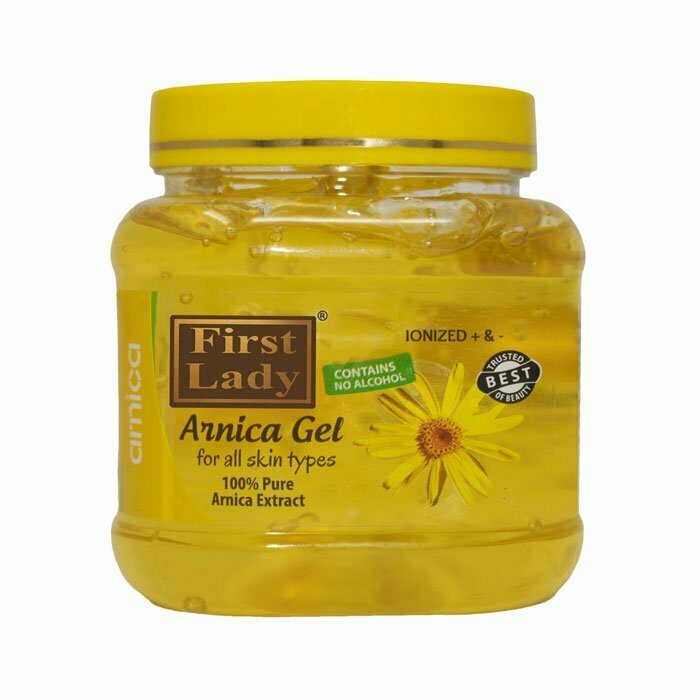 £7.49
£7.49First Lady Moisturising Arnica & Glycerin Beauty gel is ideal for moisturising and soothing the skin, shielding it from sun damage, and protecting it from dry and itchy skin conditions.
Read our blog: The Marvels of Arnica Extract in Skincare
Where Glycerin Comes In: Hydration Alongside Relief
An anti-inflammatory ingredient is only half the story if the skin underneath it is dehydrated. That’s where glycerin, the second key ingredient in First Lady’s Arnica Beauty Gel, does its work. Glycerin is one of the most extensively studied humectants in cosmetic science: it draws water into the outer skin layer and has been shown to upregulate aquaporin channels, claudins, and filaggrin, all of which support the skin’s natural hydration and barrier function (Springer Nature).
A landmark study in the International Journal of Cosmetic Science found that a cream containing 20% glycerin measurably improved skin barrier properties over time, beyond simple surface moisturisation (Lodén, 2001, Wiley). More recent research suggests glycerin’s benefit goes further still, enhancing the cohesion of the skin’s lipid structure through hydrogen bonding, rather than acting purely as a water magnet (PMC). In practical terms, this pairing means arnica gel doesn’t just calm inflammation; it also leaves the skin genuinely more hydrated afterwards, rather than dry or tight.
Comfort Beyond the Obvious: Minor Injuries and Period Discomfort
Because arnica’s core action is calming localised inflammation and easing the discomfort that comes with it, people also reach for it for minor bumps and knocks, and, applied to the lower abdomen, for the muscular cramping associated with period pain. This use sits alongside arnica’s traditional applications for muscle aches rather than being separately clinically trialled, so it’s best thought of as a comforting, supportive addition to a routine rather than a replacement for medical advice on period pain management.
How to Use First Lady Arnica Beauty Gel
First Lady’s Arnica Beauty Gel combines arnica with glycerin in a lightweight, quick-absorbing formula suitable for both face and body. Because it sinks in fast and finishes matte rather than greasy, it works equally well as:
- A soothing gel for sunburn or sun-warmed skin
- A calming touch for fragile or recently irritated skin
- A gentle rub for general aches, bumps, and muscle tension
- A light, hydrating moisturiser with a natural glow finish
As with any topical product containing plant extracts, apply a small amount to a discreet patch of skin first if you haven’t used arnica before, and always check with a pharmacist or GP before using it on broken skin or during pregnancy.
A Word on Safety
Arnica belongs to the Asteraceae (daisy) family, and a small proportion of people can develop contact sensitivity to it, particularly those with existing allergies to related plants like chamomile, ragweed, or chrysanthemums. It should never be applied to open wounds or broken skin, and, in line with WHO guidance, is intended for topical, external use only. If in doubt, the NHS and British Skin Foundation both offer general guidance on patch testing new topical products before regular use.
The Bottom Line
Arnica’s popularity in skincare isn’t just folklore that happened to stick around. Its primary active compound, helenalin, has a well-documented and specific anti-inflammatory mechanism, and clinical trials back up genuine, measurable benefits for bruising and joint-related inflammation, with more mixed but still promising evidence for general muscle discomfort. Paired with glycerin’s well-researched hydrating properties, an arnica gel for bruising, sunburn, or everyday aches offers a naturally derived option grounded in real pharmacology, not just tradition.
References
- Effects of Arnica Phytotherapeutic and Homoeopathic Formulations on Traumatic Injuries and Inflammatory Conditions: A Systematic Review. MDPI, Plants, 2024
- Anti-inflammatory effects of Arnica montana in various cell models. ScienceDirect, Journal of Ethnopharmacology
- Helenalin, an anti-inflammatory sesquiterpene lactone from Arnica, selectively inhibits transcription factor NF-κB. PubMed.
- The Anti-inflammatory Sesquiterpene Lactone Helenalin Inhibits the Transcription Factor NF-κB by Directly Targeting p65. Journal of Biological Chemistry.
- Systematic review on the efficacy of topical Arnica montana for the treatment of pain, swelling and bruises. NCBI Bookshelf, DARE
- The Effect of Topical Arnica on Muscle Pain. ResearchGate
- Glycerol as a Skin Barrier Influencing Humectant. Springer Nature Link
- The influence of a cream containing 20% glycerin and its vehicle on skin barrier properties. Lodén, International Journal of Cosmetic Science, 2001
- Comparative Study on Epidermal Moisturising Effects and Hydration Mechanisms. PMC
- NHS: Bruises. nhs.uk
- British Skin Foundation: Patch Testing. britishskinfoundation.org.uk
- Royal Pharmaceutical Society. rpharms.com