
Kojic Acid Skin Brightening: Benefits, How It Works & Products
Kojic acid is one of the most widely used skin-brightening ingredients in cosmetics. This guide covers exactly how it works, what research suggests, who it suits, and how to use it correctly.
What is kojic acid?
Kojic acid is a naturally occurring organic compound produced during the fermentation of certain fungi, most commonly Aspergillus oryzae (used in making sake, soy sauce and miso). It was first isolated in Japan in 1907 and has been used in cosmetic skincare since the 1980s. Today it is one of the most widely used cosmetic alternatives to hydroquinone for brightening the look of dark spots.
How does kojic acid work on skin?
Kojic acid works primarily by inhibiting tyrosinase, the enzyme responsible for producing melanin in skin cells. By blocking tyrosinase, it may help slow melanin production, which can reduce the amount of pigment in the skin. This is why it is used to help with:
- Fading the look of existing dark spots
- Helping reduce the look of new dark marks
- Helping even the look of skin tone on the face and body
- Helping the look of post-acne marks
- Helping the look of sun-related dark marks
Kojic acid also has antioxidant properties, which may help support skin that is exposed to everyday UV. It is not a substitute for sunscreen.
What does the research say?
Kojic acid is one of the most widely studied cosmetic brightening ingredients. Published research has looked at its effect on melanin production in skin, and some studies have compared it with hydroquinone. Results vary between people and between formulations.
Kojic acid is often paired with other actives. Combining it with lactic or glycolic acid (AHAs) may help, as they gently exfoliate pigmented surface cells. Vitamin C is an antioxidant that can complement it.
Kojic acid benefits for skin
Helps the look of dark spots
With consistent use, kojic acid is widely used in cosmetics to help the look of dark spots and post-acne marks.
Evens skin tone
Because it works on melanin production rather than targeting individual spots, kojic acid may help even the look of the general skin tone, not just the most obvious marks.
Safe for regular use
Unlike hydroquinone, which is restricted in EU and UK cosmetics, kojic acid is permitted in cosmetics at established concentrations. It is generally well tolerated, though people with very sensitive skin should patch test before full application.
Antioxidant protection
Kojic acid chelates iron (binds to it), which may help support the skin against everyday oxidative stress.
Antimicrobial properties
Kojic acid is also used in some products for blemish-prone skin.
How to use kojic acid correctly
Concentration
Cosmetic products typically contain kojic acid at concentrations between 1% and 4%. Higher concentrations are not necessarily more effective and increase the risk of skin irritation. The EU Cosmetics Regulation sets the maximum permitted concentration for face products at 1% and body products at 2%.
Application routine
- Cleanse thoroughly to remove surface sebum and allow actives to penetrate.
- Apply toner or serum containing kojic acid while skin is slightly damp.
- Follow with a leave-on cream for sustained contact with the skin.
- Always apply SPF in the morning: kojic acid reduces melanin production, which temporarily lowers the skin’s natural UV defence. Sun protection is not optional when using any brightening active.
How long before you see results?
Results vary from person to person. Established dark spots can take longer to look lighter. Deeper or longer-standing marks can take longer to look lighter. Regular, consistent use is generally recommended over occasional heavy application.
Who is kojic acid suitable for?
Kojic acid is used in cosmetics for many skin types, at appropriate concentrations. It is often chosen by people with:
- Medium to dark skin tones, where dark marks can be more noticeable
- Post-acne dark marks
- Sun-related dark marks and uneven tone
- A daily sun protection routine
- Anyone seeking a hydroquinone-free brightening routine
People with very sensitive or reactive skin should patch test any kojic acid product before applying it to a large area. A small number of people react to kojic acid; if redness or itching occurs, discontinue use.
Kojic acid skin brightening products from First Lady London
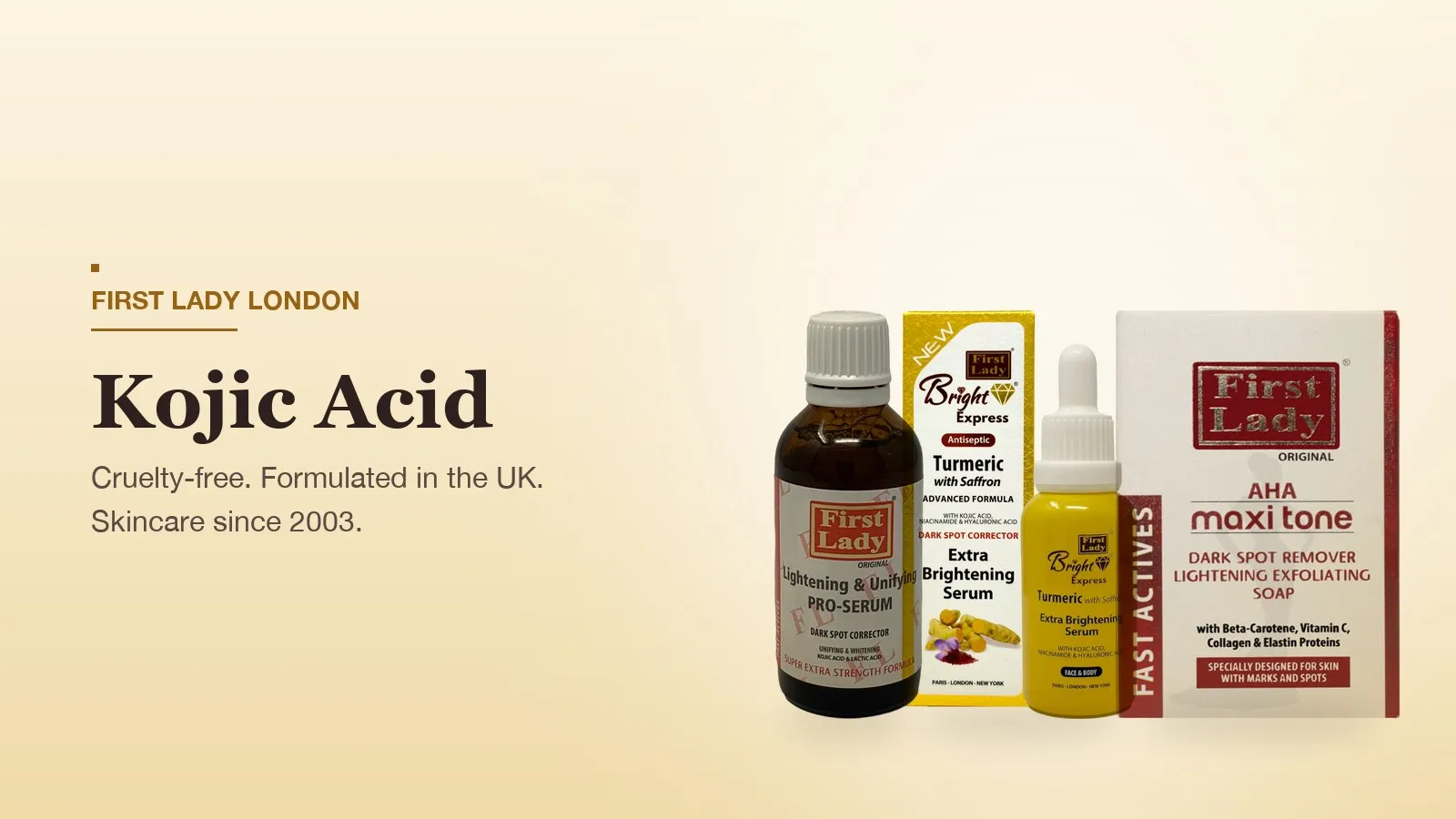
All First Lady London brightening products are UK-formulated and free from hydroquinone and harsh bleaching agents. Kojic acid features throughout the range.
Fast Actives range
The Fast Actives range is built around kojic acid combined with AHAs and botanical extracts including argan, carrot, papaya, lemon, charcoal and aloe vera. Available as creams, soaps, toners, shower creams and complete kits targeting face and body hyperpigmentation.
Bright Express range
The Bright Express range pairs kojic acid with lactic acid (AHA) and vitamin C for a multi-ingredient brightening routine. Available in turmeric, snail slime, papaya, argan and pink diamond variants as multi-step kits.
Kojic acid soap
Several First Lady products in the Original Classic scrubs range and Fast Actives line include kojic acid soap bars, which provide a daily brightening cleanse as the first step of any routine.
Shop the range

Fast Actives Kojic Brightening & Unifying Face Toner
Original price was: £4.99.£3.99Current price is: £3.99.Add to basket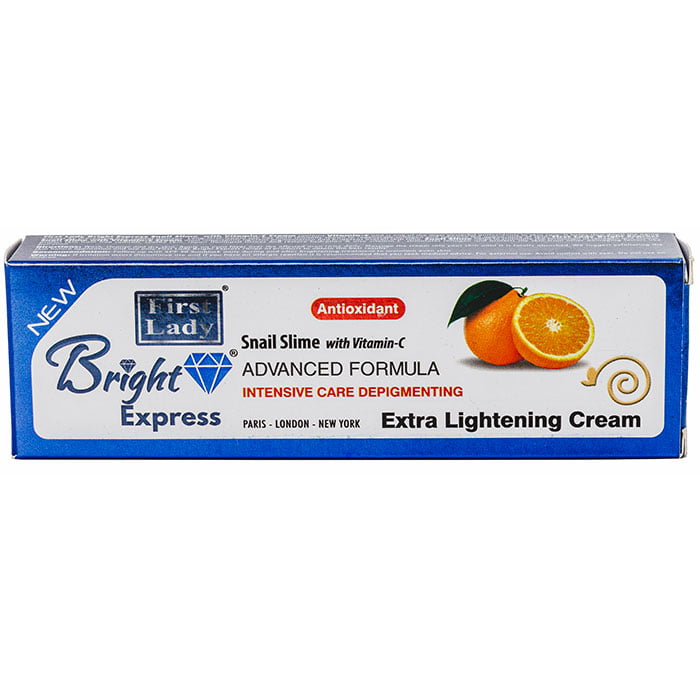
Bright Express Snail Slime with Vitamin C Extra Brightening Cream (tube)
Original price was: £7.99.£2.39Current price is: £2.39.Add to basket
Frequently asked questions
Is kojic acid better than hydroquinone?
Both are used in skincare to help the look of dark spots and uneven tone. Hydroquinone is restricted in UK and EU cosmetics, while kojic acid is permitted in cosmetics at established concentrations, which is why it is a common choice for everyday use. If you are considering anything stronger, speak to a pharmacist or doctor.
Can I use kojic acid every day?
Yes. Products formulated for daily use at appropriate concentrations (typically 1-2%) are designed for daily use, morning and evening, with a patch test first. The key condition is applying SPF every morning, as brightening actives temporarily reduce the skin’s natural melanin-based UV protection.
Can kojic acid be used on the body as well as the face?
Yes. Kojic acid is also used on the body, including areas such as elbows, knees and underarms, to help the look of dark marks. Body products are typically formulated at a slightly higher concentration (up to 2%) and in richer textures suited to larger surface areas.
Does kojic acid work on all skin tones?
Kojic acid is used on all skin tones. Patch test first and use daily sun protection. It works on melanin production, so it is often chosen by people with deeper skin tones, where dark marks can be more noticeable.
Shop the Fast Actives kojic acid range → Shop skin brightening creams →